A ‘forbidden planet’ the size of Jupiter has astronomers stumped
Context mode is active. Hover over any highlighted term to see its definition. Click a nested term to go deeper.
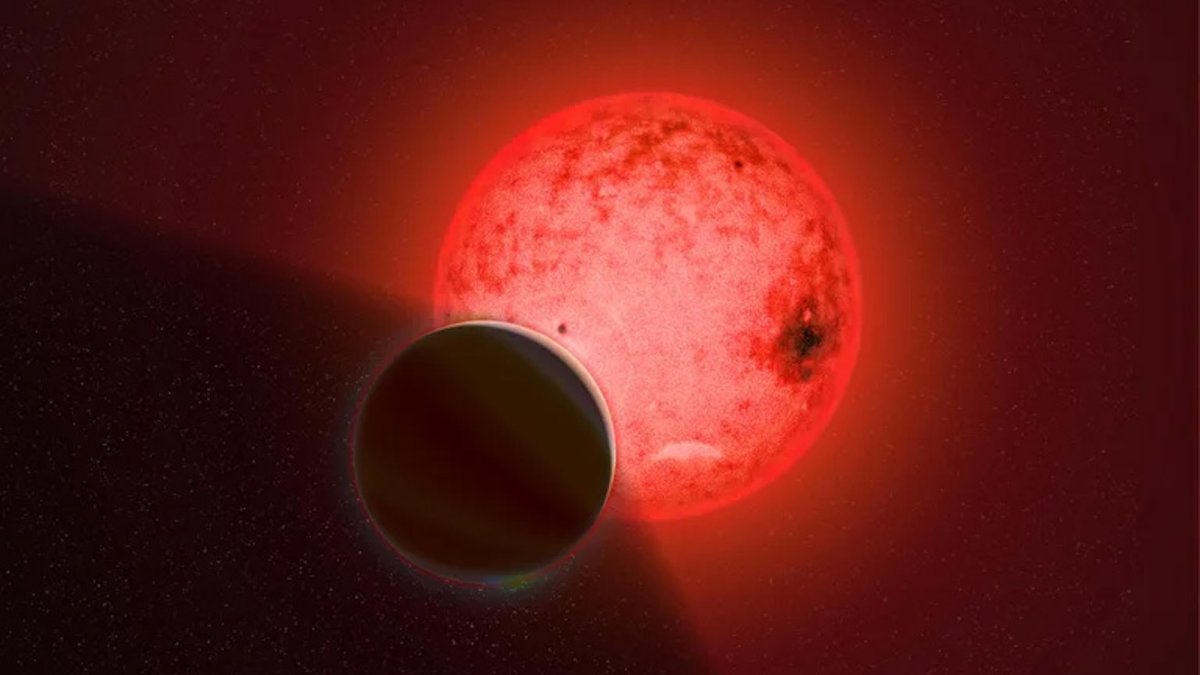
Astronomers have discovered a "forbidden planet" named TOI-5205 b, a gas giant roughly the size of Jupiter, orbiting a small red dwarf star. Its existence has baffled scientists because current planetary formation theories struggle to explain how such a large planet, with an unusual amount of heavy metals in its atmosphere, could have formed around a star so comparatively small and low in these heavier elements. This discovery, made with the TESS satellite, represents a significant anomaly in our understanding of how solar systems develop. The "forbidden" nature of TOI-5205 b stems from the profound challenge it poses to the dominant Core Accretion Theory, which posits that gas giants grow from a solid core accumulating gas. For TOI-5205 b to form around its low-mass host, the protoplanetary disk would have needed an unprecedented amount of rocky material and gas, seemingly beyond what such a star could provide. This compels astronomers to either re-evaluate core accretion under extreme conditions or consider alternative formation mechanisms like the Disk Instability Theory, potentially reshaping fundamental aspects of astrophysics and our understanding of cosmic diversity.