China launches Shenzhou 23 spacecraft with 1 of 3 astronauts set for yearlong stay
Context mode is active. Hover over any highlighted term to see its definition. Click a nested term to go deeper.
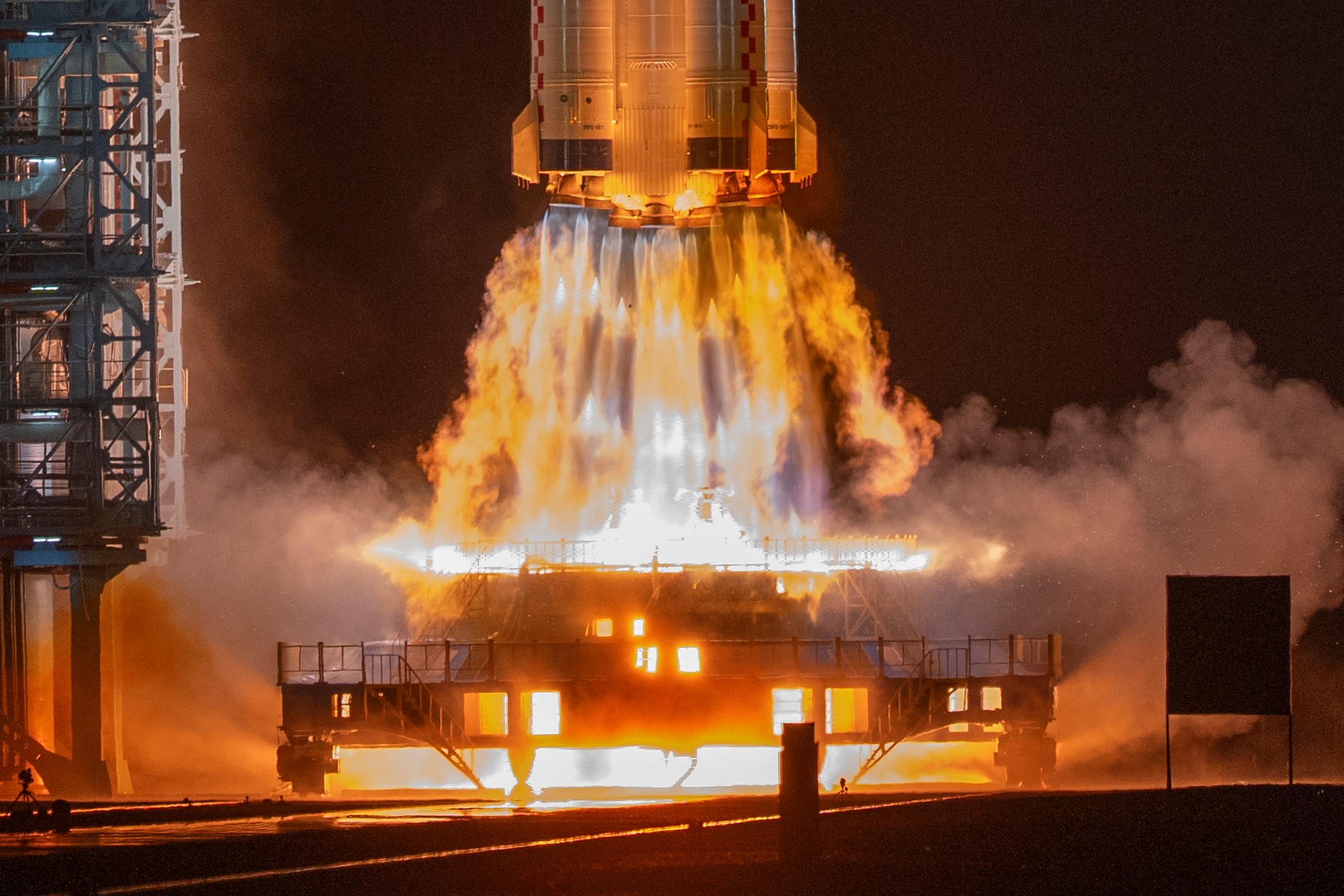
China has cemented its leadership in independent human spaceflight with the successful launch of the Shenzhou 23 spacecraft, carrying three taikonaut to the Tiangong Space Station. Departing from the Jiuquan Satellite Launch Center on Sunday night, the mission marks a significant milestone, with one crew member slated for an unprecedented yearlong stay aboard the orbital outpost, underscoring Beijing's ambitious long-duration space capabilities. This mission elevates the ongoing, undeclared Space Race, positioning China's fully operational Tiangong as a formidable rival to the aging International Space Station (ISS), which is projected for decommissioning in the early 2030s. The extended residency of a taikonaut is critical for advancing biomedical research and refining life-support systems, crucial precursors for China's announced lunar missions and eventual deeper space exploration. Beijing's rapid progress, fueled by substantial state investment, bypasses the traditional international collaborations due in part to US restrictions. Looking ahead, the Shenzhou 23 crew will conduct a series of scientific experiments, station maintenance, and potential future module expansions, further solidifying Tiangong's operational capacity. The insights gained from the yearlong stay will be pivotal for planning more complex human missions, including the establishment of a research base on the Moon. Observers will be watching for details on scientific outcomes and any shifts in China's international space policy, as its capabilities continue to expand independently.