Coal Gasification
Context mode is active. Hover over any highlighted term to see its definition. Click a nested term to go deeper.
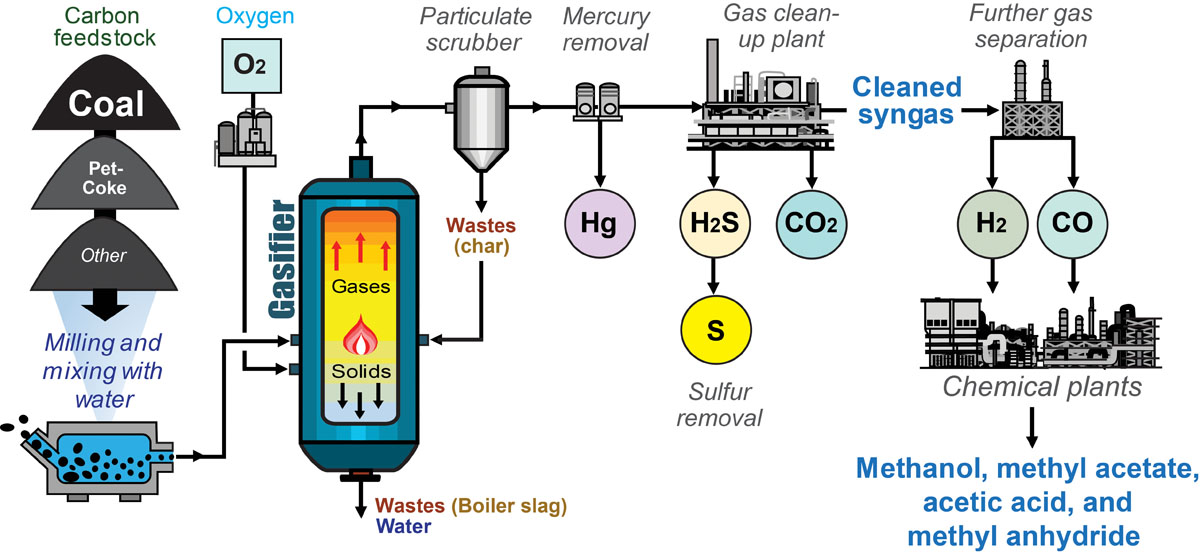
India is aggressively accelerating its coal gasification drive, with the Ministry of Coal reiterating an ambitious 100 million tonnes (MT) target by 2030 and unveiling fresh policy incentives in May 2026 to lure private and public investment. This renewed push signals a significant strategic pivot, aiming to transform a substantial portion of the nation's vast coal reserves into cleaner-burning synthetic fuels and chemical feedstocks, rather than direct combustion for power. This initiative isn't merely about energy; it's a cornerstone of India's long-term Energy Security and industrial self-reliance under the "Atmanirbhar Bharat" vision, even as global pressure mounts for decarbonization. Major public sector undertakings like Coal India Ltd (CIL) and BHEL have already inked Memoranda of Understanding for three mega projects, poised for commissioning by 2029, diversifying away from thermal power generation towards high-value chemicals and Synthetic Natural Gas. This move also implicitly addresses the need to balance energy demand with India's Net-Zero Targets, albeit with a heavy reliance on nascent Carbon Capture, Utilization, and Storage (CCUS) technologies. The immediate challenge lies in navigating high capital expenditure, ensuring technological efficiency, and addressing the considerable environmental concerns, particularly regarding water usage, which environmental groups highlighted in a March 2026 report. With GAIL (India) Limited exploring pipeline infrastructure for Synthetic Natural Gas, the focus now shifts to swift project execution, regulatory clarity for CCUS deployment, and managing public scrutiny, setting the stage for India's complex energy future.