Immuneering Presents Promising Phase 2a Data For Atebimetinib In Pancreatic Cancer; Shares Drop 22%
Context mode is active. Hover over any highlighted term to see its definition. Click a nested term to go deeper.
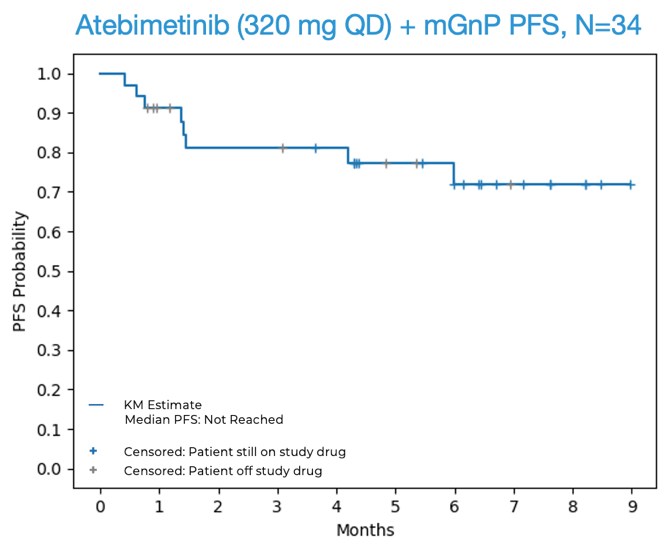
Immuneering Corporation saw its shares plummet 22% Monday, despite reporting "promising" Phase 2a trial data for its lead oncology candidate, Atebimetinib, in first-line metastatic pancreatic cancer. While the combination therapy showed a 50% objective response rate in a notoriously intractable disease, investors signaled disappointment, suggesting the results fell short of the breakthrough performance anticipated in the high-stakes oncology market. The market's harsh verdict underscores the extreme investor scrutiny on early-stage biotech, particularly for challenging indications like Pancreatic Ductal Adenocarcinoma (PCAD), where existing standards of care like FOLFIRINOX or mGnP offer limited survival benefits. Immuneering's "deep but controlled" MEK inhibitor was expected to demonstrate a compelling advantage beyond mere clinical promise, driving expectations for a higher bar than traditional efficacy signals. The discrepancy highlights a broader trend where incremental improvements, while medically significant, are often insufficient to justify lofty valuations in a capital-intensive development cycle. Immuneering now faces a critical juncture, needing to articulate a clear path to a registrational trial that can convince skeptical investors of Atebimetinib market potential and competitive differentiation. The company must also manage the delicate balance between efficacy and toxicity as it progresses, a common challenge for MEK inhibitor. Analysts will be closely watching for further data maturation and strategic partnerships, as the biotechnology sector continues to favor de-risked assets over those with ambiguous market prospects.