50-year mystery solved: Scientists confirm powerful wind blowing from the Milky Way's supermassive black hole - Ynetnews
Context mode is active. Hover over any highlighted term to see its definition. Click a nested term to go deeper.
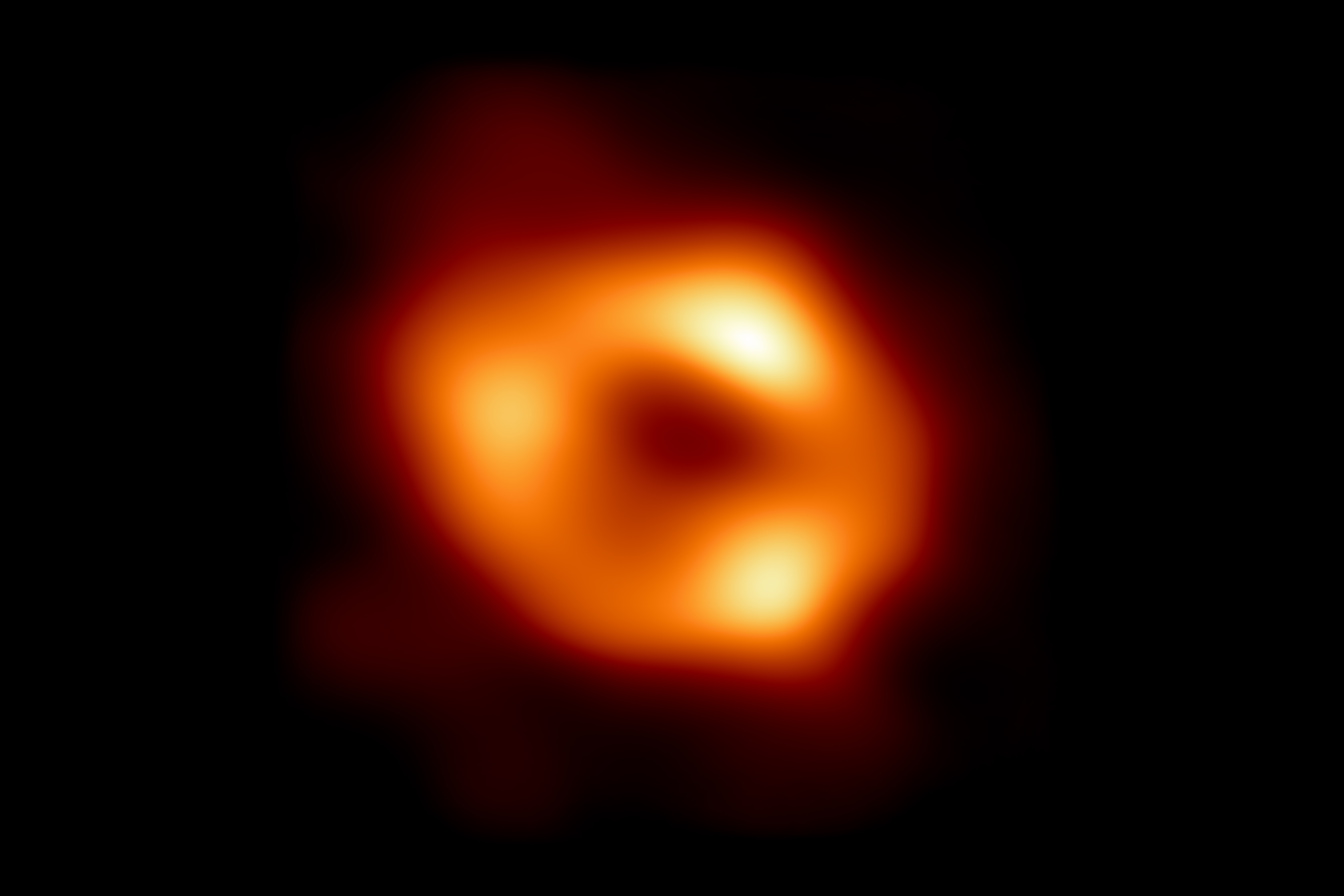
Astrophysicists at Northwestern University, led by Mark Gorski and Lena Murchikova, have finally confirmed the existence of a powerful, energetic wind blowing from Sagittarius A (Sgr A), the Milky Way supermassive black hole, solving a 50-year mystery. This breakthrough, detailed in The Astrophysical Journal Letters, provides the clearest evidence yet of how our galaxy's central black hole actively shapes its environment, challenging the perception of Sgr A as a placid cosmic giant. For decades, theoretical physics predicted that even a quiescent black hole like Sgr A should generate outflows as it consumes matter, yet direct evidence remained elusive due to its obscured nature and relatively low activity compared to other Active Galactic Nuclei (AGN). The research team leveraged five years of extraordinarily deep observations from the Atacama Large Millimeter/submillimeter Array (ALMA), revealing a vast, cone-shaped cavity of missing cold molecular gas, extending approximately one parsec from the black hole. This distinctive void, corroborated by NASA's Chandra X-ray Observatory data showing hot gas in the same region, serves as the unmistakable imprint of a powerful, long-sought galactic wind that has been active for at least 20,000 years. This discovery fundamentally reshapes our understanding of galaxy evolution, affirming that even during its quiet phases, a supermassive black hole continuously impacts star formation and the redistribution of interstellar medium. Future research will undoubtedly focus on further characterizing this galactic wind, its precise mechanisms, and its broader influence across the Milky Way, offering critical insights into the universal interplay between black holes and their host galaxies. The findings reinforce that the Milky Way central black hole is not an anomaly but behaves consistently with broader astrophysical models, providing a crucial 'quiet state' benchmark for black hole studies.