Russia, Bahrain push for restoring safe passage through Hormuz — Russian MFA
Context mode is active. Hover over any highlighted term to see its definition. Click a nested term to go deeper.
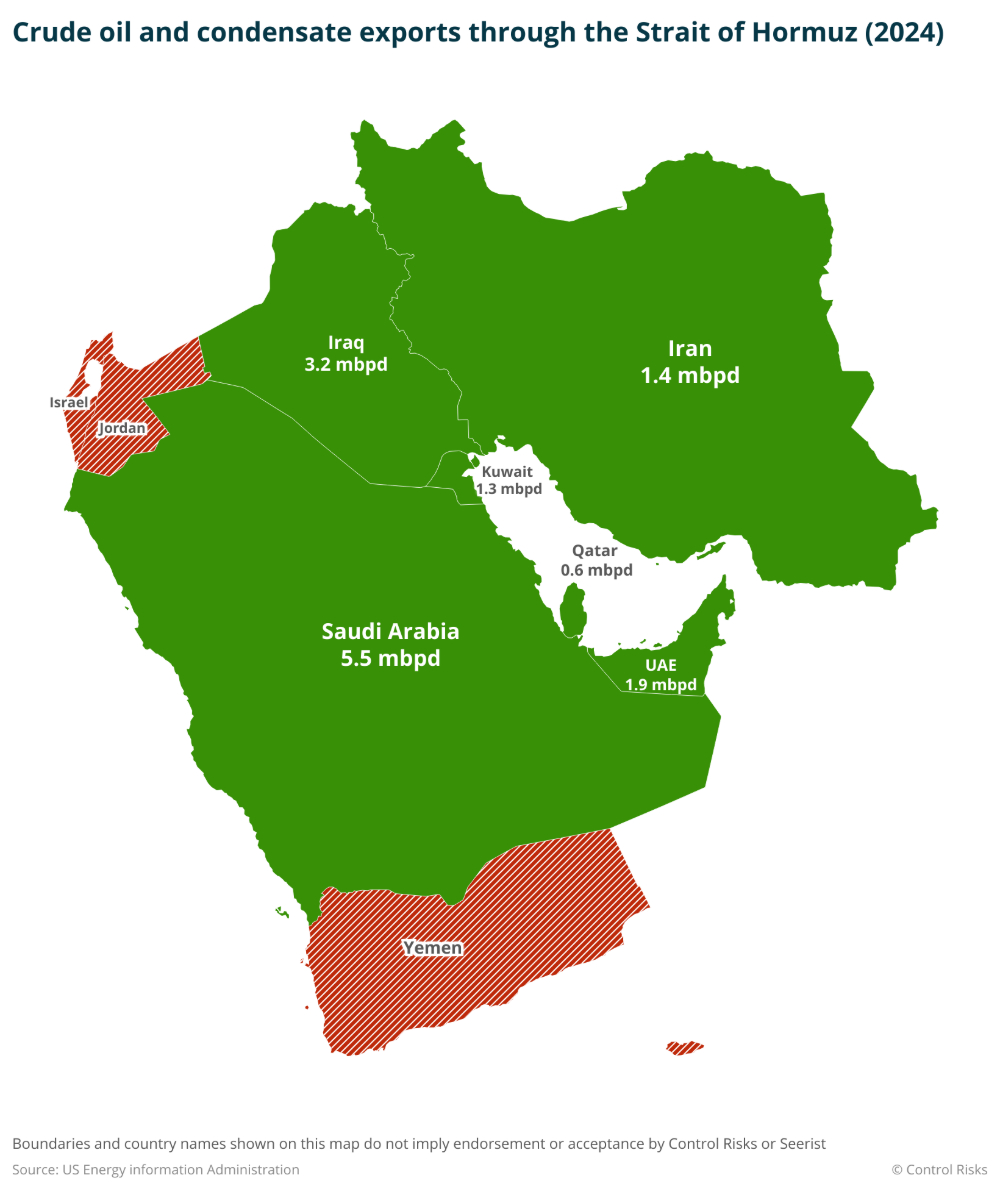
In a fresh push to de-escalate heightened tensions in the strategically critical Persian Gulf, Russia and Bahrain have emphasized the urgent need to restore safe and unhindered navigation through the Strait of Hormuz. Russian Foreign Minister Sergey Lavrov and his Bahraini counterpart Abdullatif bin Rashid Al Zayani, meeting in Moscow on June 11, underscored the strait's vital importance to the global economy and exchanged views on Russia updated concept for collective security in the region. This comes amidst a backdrop of recent Iranian aggression, including alleged attempts to strike commercial ships and a temporary closure of the strait, as well as ongoing US-Iran hostilities. The renewed focus on the Strait of Hormuz by Russia and Bahrain is a direct response to a rapidly deteriorating security environment that has seen multiple attacks on international shipping and a significant slowdown of traffic, threatening global energy supplies. Iran has, in recent months, asserted stricter controls over the strait, going as far as to temporarily declare it closed and strike 'violating' vessels, actions that US Central Command disputes as unlawful. This volatility is further exacerbated by the ongoing 2026 Iran War, with tit-for-tat strikes between the US and Iran, which has included Iranian attacks on US military bases and the US Fifth Fleet headquarters in Bahrain. Russia long-standing 'Collective Security Concept for the Persian Gulf,' first introduced in 2019 and recently updated, aims to establish a regional security architecture that includes all littoral states, explicitly pushing back against what it views as a US-dominated security framework. As Russia seeks to expand its influence as a mediator and security guarantor in the Middle East, the coordinated push with Bahrain highlights a complex geopolitical dance. The GCC, while condemning Iranian actions, has also called for dialogue and de-escalation, reflecting diverse regional responses to the conflict. The viability of Russia collective security proposals, which have previously been met with skepticism and even vetoes at the UN Security Council by Russia and China when presented by the US and Bahrain, remains a key question. Observers will be watching for concrete steps toward implementing safe passage protocols and whether this latest diplomatic effort can truly stabilize a waterway crucial for a quarter of the world's seaborne oil trade and a fifth of its liquefied natural gas.