Asteroid Impact Site Reveals Possible Traces Of Early Life
Context mode is active. Hover over any highlighted term to see its definition. Click a nested term to go deeper.
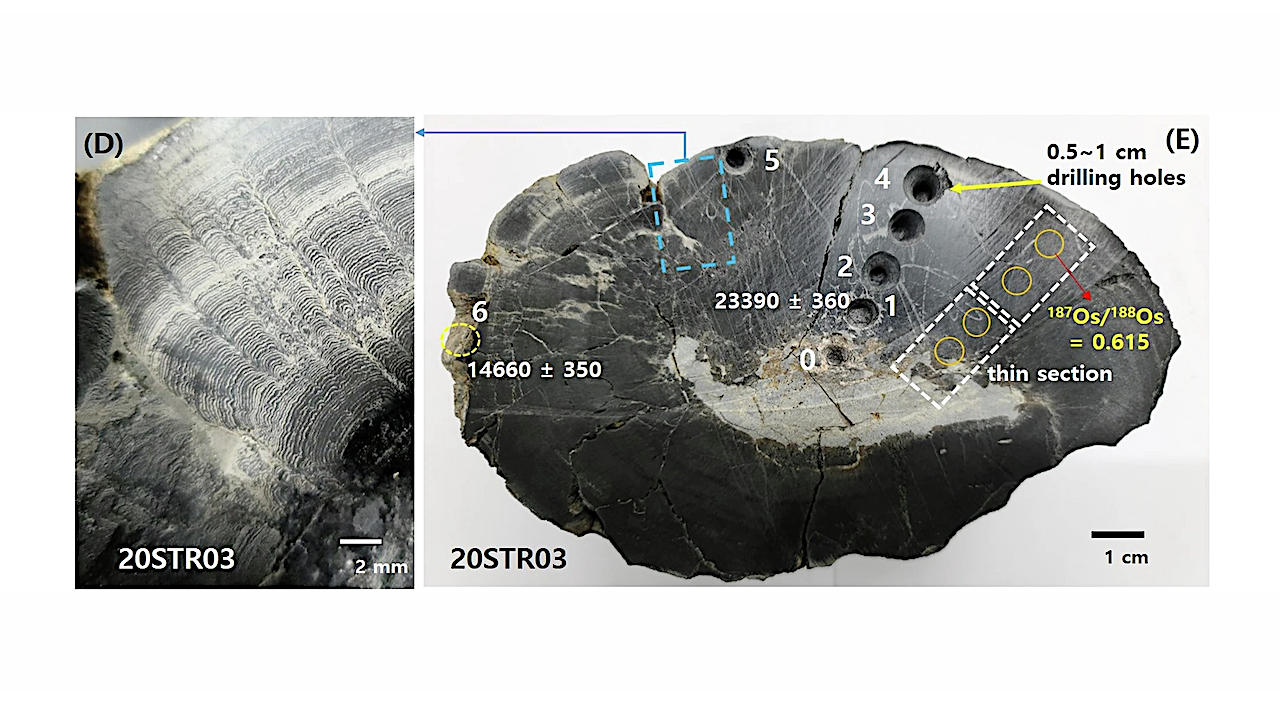
A South Korean research team from the Korea Institute of Geoscience and Mineral Resources (KIGAM) has made a groundbreaking discovery, suggesting that ancient impact-generated lakes may have been crucial cradles for the earliest forms of oxygen-producing life on Earth. Published in Nature Geoscience, their findings challenge conventional views by presenting evidence from an asteroid impact site, indicating these localized, hydrothermally active freshwater environments could have provided stable conditions for organisms capable of oxygenic photosynthesis, thereby accelerating the accumulation of atmospheric oxygen. This research fundamentally reshapes our understanding of the Great Oxidation Event (GOE), a planetary-scale transformation that saw Earth's atmosphere become oxygen-rich over the Proterozoic Eon. Previously, the primary focus for early oxygen production was largely on marine environments. By highlighting impact-generated lakes, the KIGAM team introduces a significant terrestrial component, expanding the potential habitats for early cyanobacteria. This has profound implications for astrobiology, influencing our search for extraterrestrial life on other celestial bodies with similar impact histories and liquid water, moving beyond a purely oceanic paradigm for habitability. It underscores the complex interplay between geological events and biological evolution in deep time.