Major Mideast Power Shift: Turkey, Saudi, Pakistan Forge New Defense Alliance
Context mode is active. Hover over any highlighted term to see its definition. Click a nested term to go deeper.
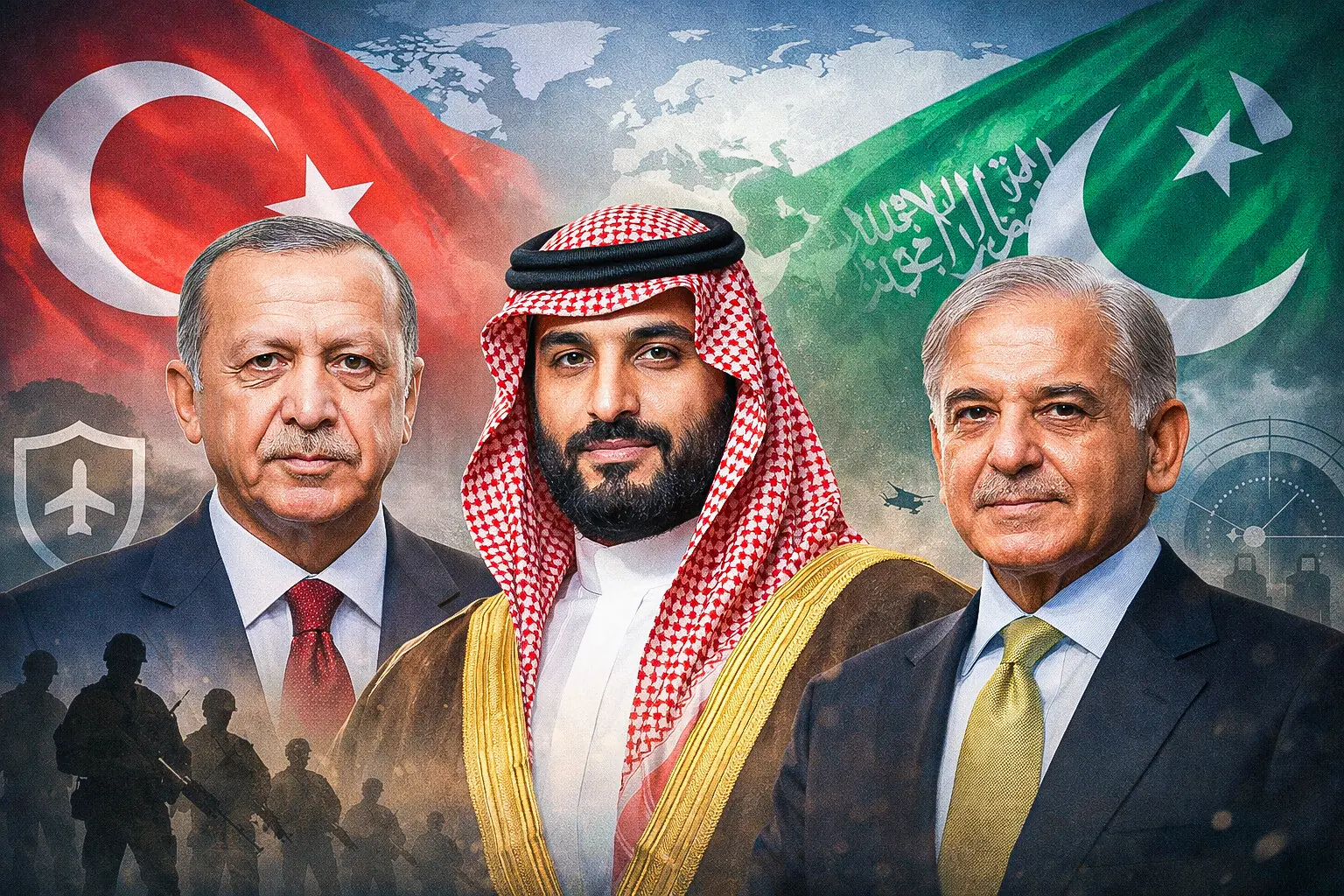
In a seismic shift for regional security, Turkey, Saudi Arabia, and Pakistan have officially signed a new military pact, the Mecca Joint Defense Agreement, stipulating that an attack on one nation will be considered an attack on all. This 'NATO-style' collective defense commitment, inked on Friday in Mecca by the leaders of these three influential Muslim-majority nations, instantly reconfigures power dynamics across the Middle East and South Asia, coming amidst an ongoing war involving Iran and persistent Houthi aggression. This landmark agreement is a direct response to escalating regional instability, especially with Gulf states increasingly questioning the reliability of the United States as a sole security provider. Saudi Arabia, with its vast economic power, gains a bolstered defense layer against threats like Houthi missile and drone strikes, while Turkey, boasting NATO second-largest army and a booming defense industry, expands its strategic reach. For nuclear-armed Pakistan, the pact offers renewed financial support from Riyadh and significant prestige, embedding it deeper into the Middle East's evolving security landscape. This trilateral alliance builds upon a bilateral Strategic Mutual Defense Agreement already in place between Saudi Arabia and Pakistan since September 2025. The immediate aftermath will see intense diplomatic maneuvers as other regional and global players assess the implications of this new bloc, which Turkish President Erdogan stated is open to other countries. Reactions from Iran are expected to be sharply negative, viewing the pact as a direct threat, while India's Ministry of External Affairs is closely monitoring developments, particularly given Pakistan involvement. Experts suggest the true test will be how quickly and decisively the 'attack on one is an attack on all' clause translates into tangible military support, especially given past precedents where similar defense agreements haven't always led to direct intervention.