A cave in South America preserved a hidden warning from the last Ice Age - Earth.com
Context mode is active. Hover over any highlighted term to see its definition. Click a nested term to go deeper.
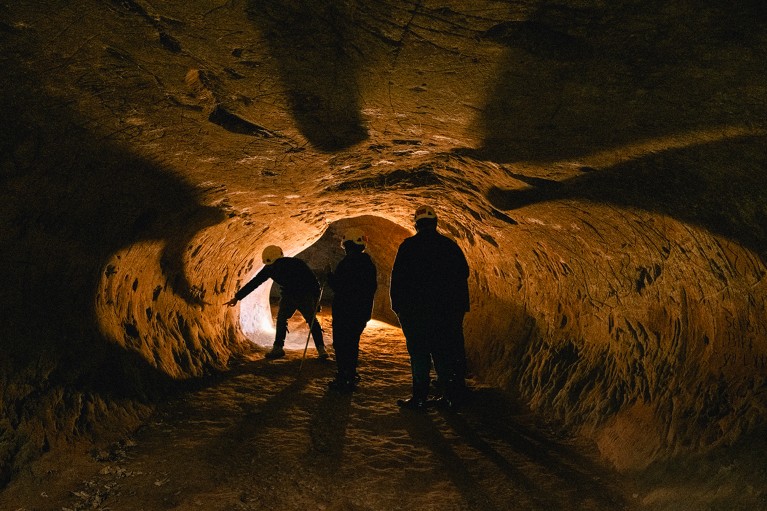
Forget slow and steady – a new study from Brazil's Rei do Mato Cave just shattered our understanding of how quickly tropical temperatures can jump. Researchers, led by the University of São Paulo's Angela Ampuero, unearthed a stark warning from the last Ice Age, revealing that this part of South America experienced rapid warming, including a sharp 1.1°C increase over just two centuries, at a time when the Northern Hemisphere was plunging into a cold snap. This discovery provides the most precise tropical land-temperature record to date, fundamentally reshaping our view of past climate shifts. The surprising speed of this ancient warming, captured within layers of a stalagmite spanning 22,500 to 9,300 years ago, challenges previous assumptions of gradual deglaciation. Scientists believe this dramatic shift was likely triggered by a weakening of the Atlantic Meridional Overturning Circulation (AMOC), which caused heat to pool in the South Atlantic, starkly contrasting with the cold of the Younger Dryas in the north. This pinpoint accuracy, achieved by analyzing microscopic fluid inclusions, highlights a critical natural mechanism that can drive abrupt climate changes. This 'hidden warning' isn't just about ancient history; it holds critical lessons for our warming world. The study's findings underscore the potential for rapid, unexpected climate shifts in the tropics, a region particularly vulnerable to the impacts of global warming today. As global temperatures continue to rise, understanding these past abrupt changes becomes vital for predicting future climate instability and preparing for potential environmental ripple effects.