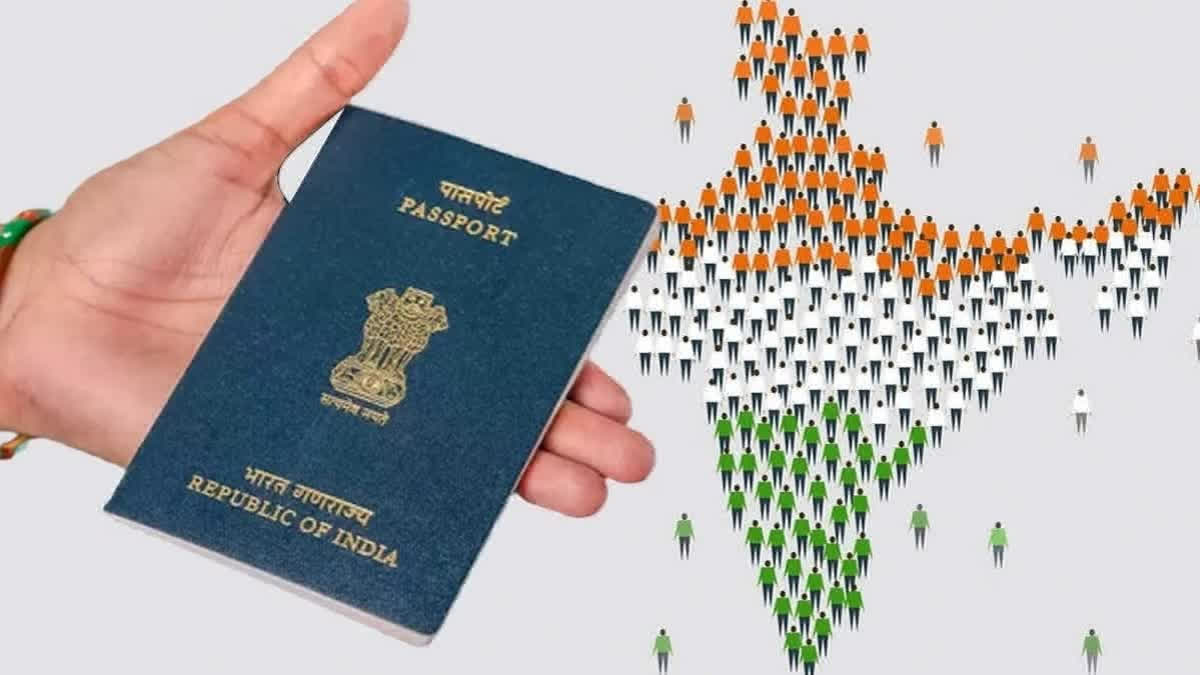
A statement by a senior Ministry of External Affairs (MEA) official that an Indian passport should be viewed primarily as a travel document and not as conclusive proof of citizenship has sparked widespread debate across legal and political circles. The remarks, made during the 14th Passport Seva Divas celebrations, have prompted questions about what exactly establishes Indian citizenship and whether passport holders should be concerned.
Context mode is active. Hover over any highlighted term to see its definition. Click a nested term to go deeper.
A senior official from India's Ministry of External Affairs (MEA) has sparked a nationwide debate, declaring that an Indian passport should be seen primarily as a travel document, not definitive proof of citizenship. This statement, made during the 14th Passport Seva Divas celebrations on June 24, 2026, has immediately sent ripples through legal and political circles, forcing a re-evaluation of what truly establishes one's Indian identity. The MEA clarification, though legally accurate, cuts straight to the heart of a long-standing public misconception, especially sensitive given recent national discussions around the National Register of Citizens (NRC) and the Citizenship Amendment Act (CAA). Legal experts are underscoring that Indian citizenship is fundamentally determined by the Citizenship Act, 1955, and supported by a basket of documents such as birth certificates, domicile certificates, Aadhaar, and Voter ID, rather than any single piece of paper. This distinction is crucial, as many citizens, particularly Gen-Z who are often quick to grasp complex issues, might have implicitly viewed their passport as their ultimate proof of belonging. This development is likely to prompt further calls for public awareness campaigns from the government to clarify citizenship criteria, potentially alleviating anxieties stirred by the official's remarks. We can expect more detailed explanations from legal luminaries and government spokespersons, possibly even parliamentary discussions. The immediate focus will be on how this clarification impacts routine administrative processes and whether it necessitates a deeper societal conversation about documentation and identity in India.