India's Agni-4 Missile Soars, Bolstering Nuclear Deterrence and Strategic Readiness
Context mode is active. Hover over any highlighted term to see its definition. Click a nested term to go deeper.
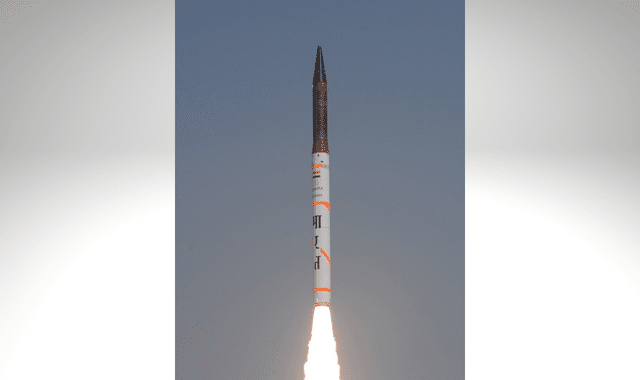
India successfully test-fired its Agni-4 Medium Range Ballistic Missile (MRBM) yesterday, on August 6, 2026, from the Integrated Test Range (ITR) in Chandipur, Odisha. The launch, overseen by the Strategic Forces Command (SFC), confirmed all the missile's operational and technical features, sending a clear message about India's robust defense capabilities. This 'textbook mission' reaffirms the nation's commitment to a strong strategic deterrent. The Agni-4, a nuclear-capable and indigenously developed missile, is a crucial part of India's 'credible minimum deterrence' strategy, designed to carry a 1-tonne payload over a range of 4,000 kilometers. It's equipped with advanced technologies like a Ring Laser Gyro-based Inertial Navigation System (RINS), making it highly accurate and reliable. This latest success follows other recent Indian missile advancements, including the Agni-Prime and Agni-1 tests earlier this year, and ongoing work by the Defence Research and Development Organisation (DRDO) on a multi-layered Ballistic Missile Defence (BMD) system. With the Agni-4 now fully validated, India further solidifies its strategic posture, enhancing its ability to respond to potential threats and maintain regional stability. The successful test also highlights India's growing self-reliance in advanced defense technology, showcasing its continuous progress in missile development. Observers will be watching for more details on how these ongoing advancements integrate into India's evolving defense strategy, especially given recent regional security dynamics.