Accra's Flood Reckoning: Tough Action Begins as Government Targets Illegal Structures
Context mode is active. Hover over any highlighted term to see its definition. Click a nested term to go deeper.
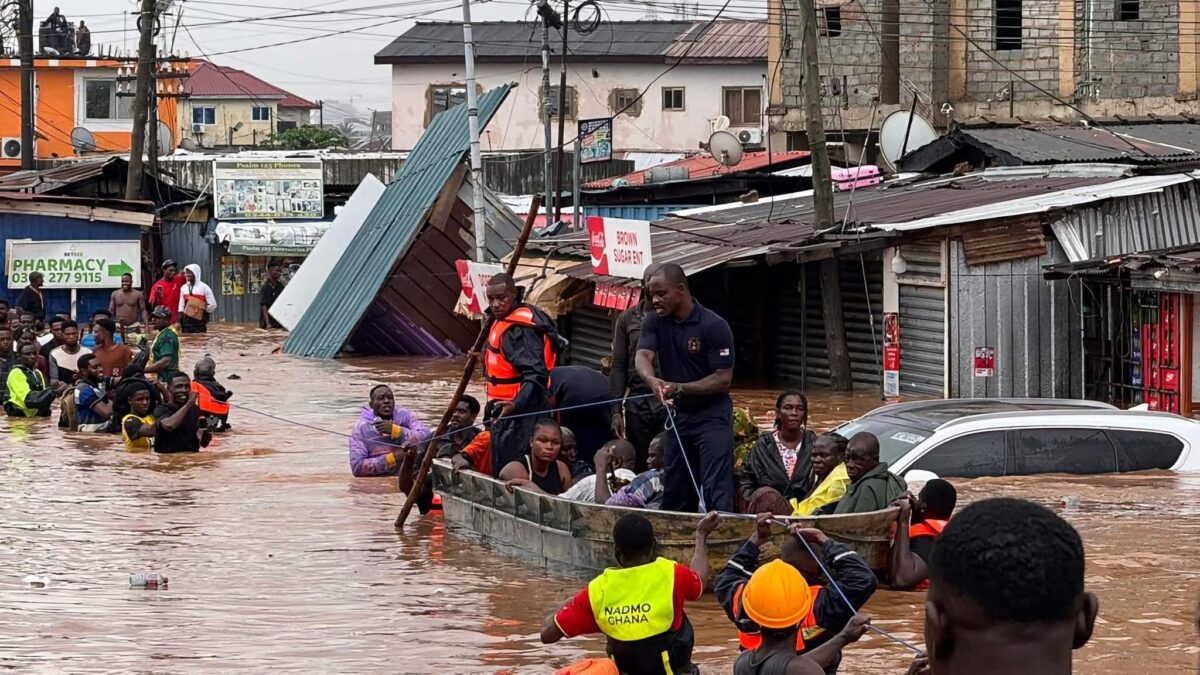
Accra is finally taking decisive action against its perennial flooding crisis, with the Greater Accra Regional Coordinating Council (GARCC) launching a major crackdown this week. This follows a devastating June 29, 2026, downpour that claimed 12 lives, displaced thousands, and brought Ghana's capital to a standstill, marking it as the wettest June recorded in decades and intensifying calls for a permanent solution. Authorities are now enforcing a strict 50-meter buffer zone along critical waterways, initiating large-scale demolitions of unauthorized buildings that have long obstructed natural water flow. The recurring floods, exacerbated by rapid urbanization and increasingly intense rainfall linked to Climate Change, have consistently overwhelmed the city's inadequate Drainage Systems and Waste Management infrastructure. Despite significant investment through initiatives like the World Bank-funded Greater Accra Resilient and Integrated Development (GARID) Project, which secured an additional US$150 million in 2023, progress has been hampered by contractor delays, political interference, and continued encroachment on natural water paths. Experts also point to a systemic failure in urban governance, with past efforts focusing more on emergency relief than proactive prevention. Looking ahead, the government has reallocated GH¢576 million from its 2026 Budget towards flood response and mitigation, signaling a shift towards stronger enforcement and long-term resilience. The Ministry of Works and Housing and the National Disaster Management Organisation (NADMO) are intensifying desilting efforts and improving early warning systems, while urban planners advocate for innovative 'Sponge City Concept' and 'Blue-Green Infrastructure' approaches to integrate natural systems into urban development. This renewed commitment, backed by a planned 2027 budget allocation for comprehensive solutions, aims to break Accra decades-long cycle of disaster and recovery.