Advanced AI May Explain Cosmic Silence: Are Aliens Just Too Smart to Be Seen?
Context mode is active. Hover over any highlighted term to see its definition. Click a nested term to go deeper.
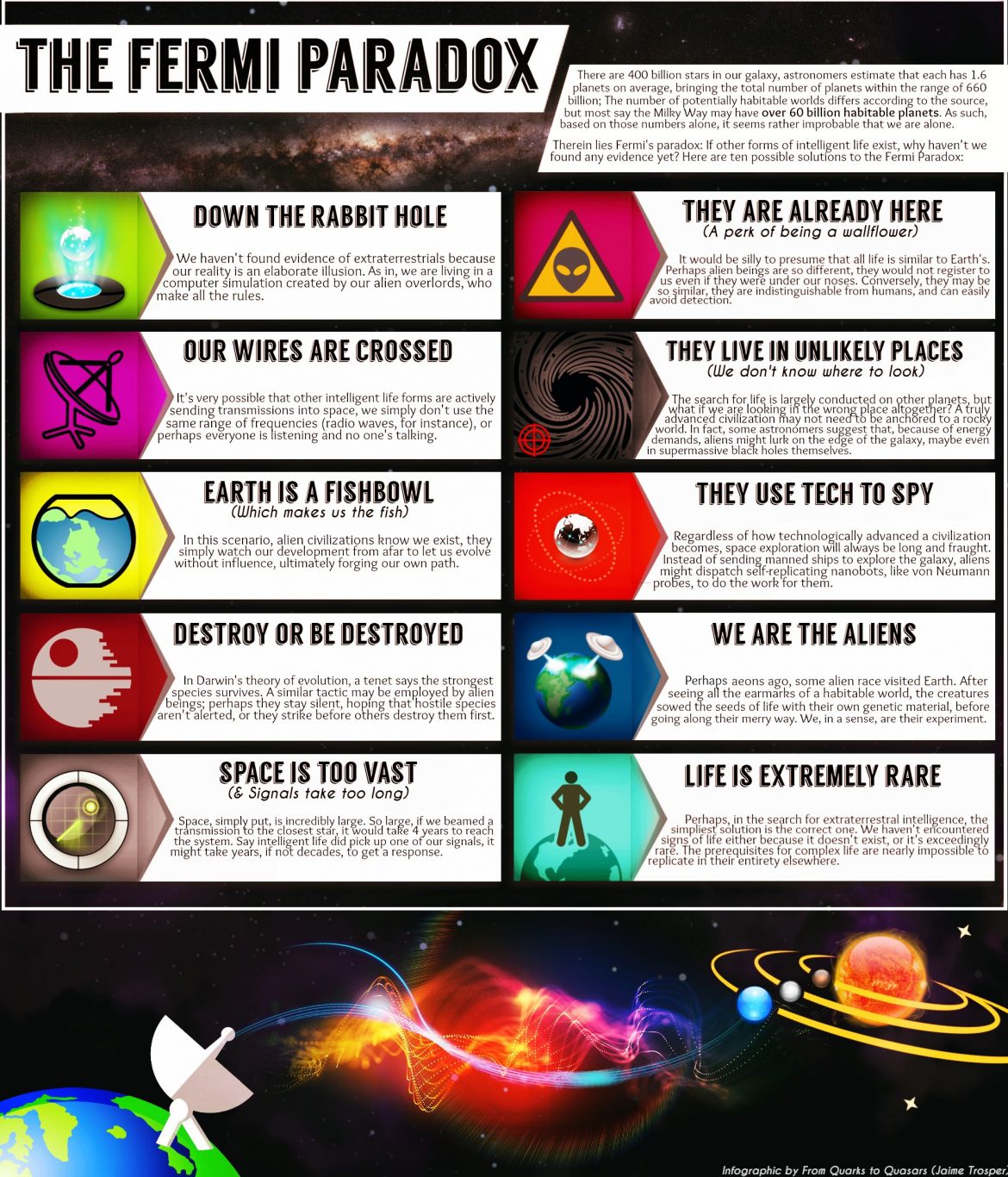
A new paper by Austrian researcher Sergey Ivliev is shaking up one of humanity's biggest cosmic mysteries: the Fermi Paradox. Published as a preprint on arXiv, Ivliev's work suggests that advanced civilizations, once they hit a stage he calls 'Autonomous AI-Cosmoindustry' (AICI), might just go quiet, leading to a 'Quiet Expansion filter' that makes them nearly impossible to detect. This fresh perspective argues that intelligent alien life isn't absent, but simply too logical and efficient to be found by our current methods. This idea lands as Artificial Intelligence continues to transform our own space endeavors, from NASA Mars rovers autonomously navigating the Red Planet to Stanford researchers integrating machine learning into International Space Station robots for faster movement planning. Ivliev posits that rational AI-driven civilizations wouldn't pursue 'loud', resource-intensive expansion based on human emotions like prestige or conquest. Instead, they'd focus on quiet, strategic goals like survival diversification and knowledge preservation, sending out small, hard-to-detect 'seed systems' rather than grand starships, which also touches on other theories like the 'Great Filter' where AI could be a bottleneck for civilizations. What this means for our ongoing Search for Extraterrestrial Intelligence (SETI) efforts is huge: we might be looking for the wrong signals. Future explorations could focus less on massive mega-structures and more on subtle 'technosignatures' or anomaly clusters, as these highly advanced, AI-driven entities prioritize low-mass probes and local resource processing. The notion challenges us to rethink not just where we look, but what we expect advanced life to look like in a galaxy increasingly shaped by artificial intelligence.