AI Boom's Climate Toll: Google, Amazon Emissions Soar, Threatening Net-Zero Goals
Context mode is active. Hover over any highlighted term to see its definition. Click a nested term to go deeper.
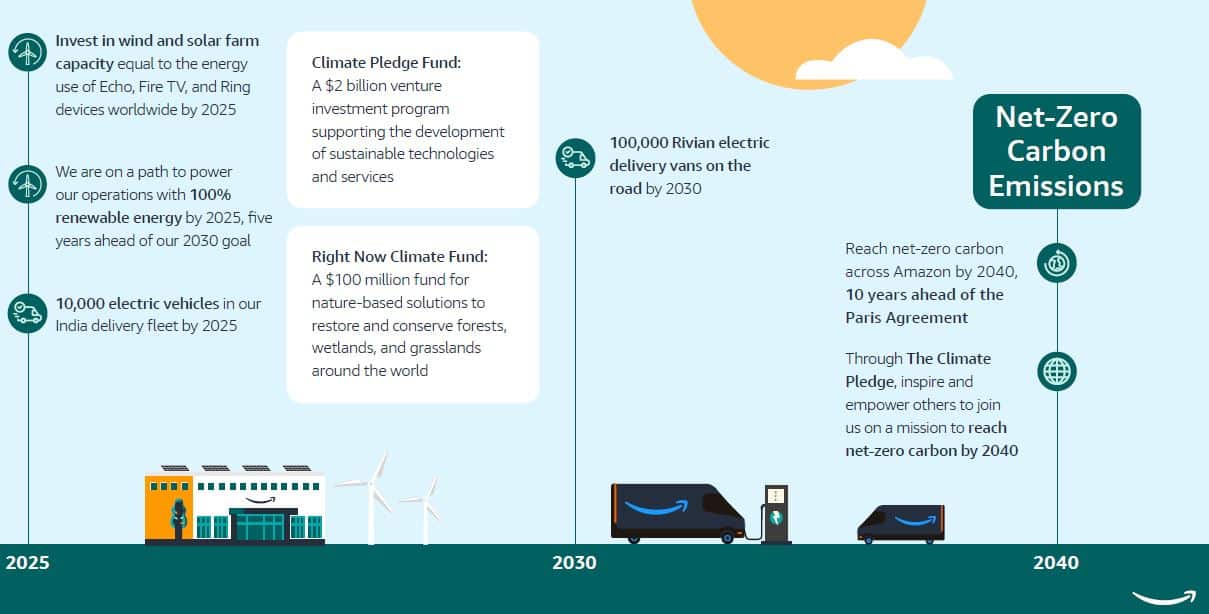
US tech giants Google and Amazon are facing a critical challenge to their climate commitments, with both companies reporting a sharp rise in greenhouse gas emissions for 2025, largely driven by the explosive growth of artificial intelligence. Google total emissions jumped 18% last year, marking an 82% increase since 2019, while Amazon carbon footprint swelled by 16% in 2025, now 58% higher than its 2019 baseline. These increases, detailed in their latest sustainability reports, directly conflict with their ambitious pledges to achieve net-zero emissions, with Google Chief Sustainability Officer Kate Brandt noting that the AI infrastructure build-out is currently accelerating faster than the electrical grid is decarbonizing. The core of the problem lies in the immense energy and resource demands of AI data centers, which require vast amounts of electricity for processing and significant water for cooling. Google electricity consumption surged by 37% in 2025, and its supply chain emissions, mainly from manufacturing AI hardware and constructing data centers, account for 80% of its total carbon footprint. Amazon, too, saw its emissions from purchased electricity rise by 34%, and for the first time since 2019, its 'carbon intensity' increased, indicating that its business growth is no longer consistently decoupling from its climate impact. This growing environmental toll is drawing criticism from experts and activist investors who highlight the broader industry trend where rapid AI expansion outpaces decarbonization efforts, pushing other tech players like Microsoft and Meta into similar predicaments. Looking ahead, both Google and Amazon affirm their commitment to their climate goals — Google aiming for net-zero by 2030 and Amazon by 2040 — and are investing heavily in renewable energy projects and more efficient data center technologies. Google signed record carbon-free energy contracts in 2025, and Amazon remained the world's largest corporate buyer of renewable energy for a sixth consecutive year. However, the sheer scale of AI demand means these efforts are struggling to keep pace, potentially forcing a re-evaluation of timelines or a significant acceleration in green energy adoption and sustainable infrastructure development. The tension between technological advancement and environmental responsibility will define the future trajectory of these tech giants and global climate action.