AI Breakthrough: Early Heart Failure Detection with EchoGo Could Save Thousands
Context mode is active. Hover over any highlighted term to see its definition. Click a nested term to go deeper.
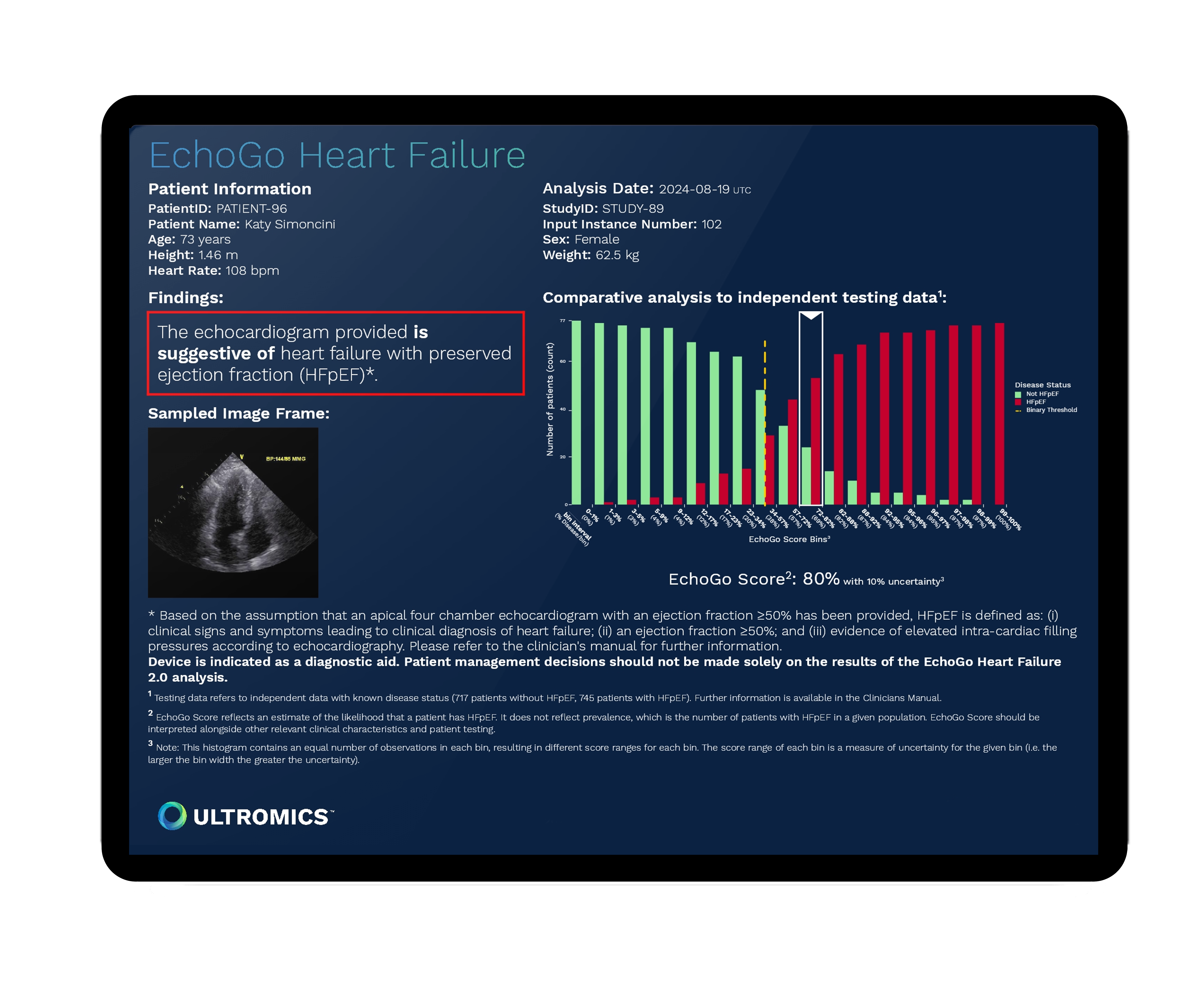
A groundbreaking report from the American Heart Association AI Assessment Lab reveals that an Artificial Intelligence tool, Ultromics' EchoGo Heart Failure, can spot signs of heart failure with preserved ejection fraction (HFpEF) up to nine months earlier than standard medical tests. This early detection could significantly improve patient outcomes, potentially preventing nearly 500 deaths for every 10,000 patients and leading to substantial healthcare savings. This isn't just about faster diagnosis; it's a leap towards more timely and effective interventions for a condition that often goes undetected until advanced stages. Heart failure affects over 50 million people globally, and HFpEF, particularly challenging to diagnose due to its subtle symptoms and complex nature, accounts for a large portion of these cases. The report, based on independent clinical data from Dandelion Health, highlights how AI analyzes complex imaging and clinical data to uncover early disease patterns, addressing a critical gap in traditional diagnostic methods. Looking ahead, the successful validation of tools like EchoGo Heart Failure signals a major shift in cardiology, pushing for wider adoption of AI in clinical practice. However, the American Heart Association stresses the ongoing need for careful evaluation, ethical guidelines, and ensuring these AI solutions are fair and unbiased across diverse patient groups before widespread use. As the global market for AI in cardiology rapidly expands, this development underscores the immense potential for AI to transform how heart conditions are managed, moving from reactive treatment to proactive prevention.