AI Risks Beyond Cheating: Education's New Frontier of Critical Thinking Crisis
Context mode is active. Hover over any highlighted term to see its definition. Click a nested term to go deeper.
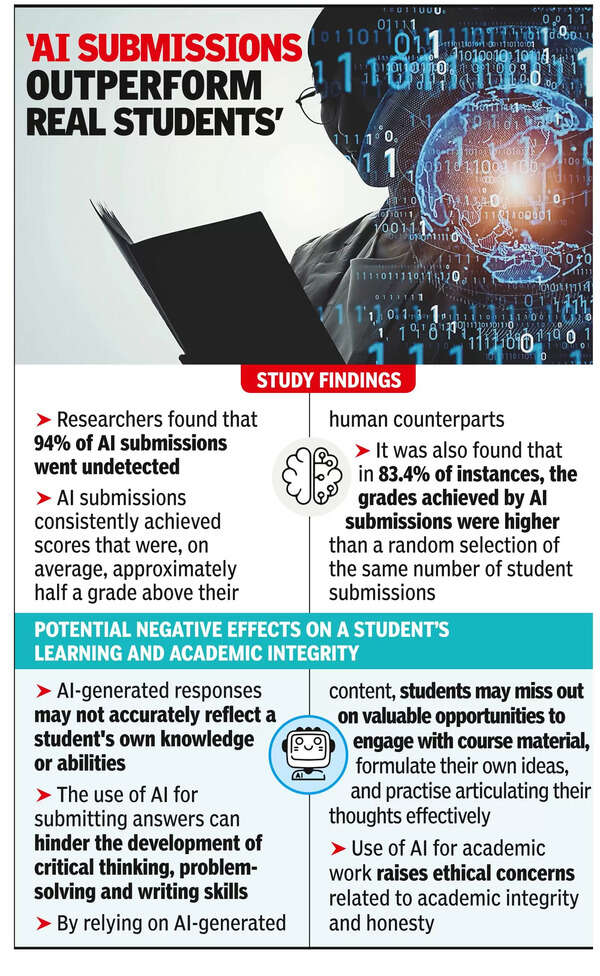
The New South Wales (NSW) government has taken a drastic step, banning unsupervised take-home assignments for Year 12 students starting next term, aiming to protect the integrity of the Higher School Certificate (HSC) after more than 1,000 cases of AI-powered cheating emerged in 2025. However, a leading education expert warns that the true dangers of Artificial Intelligence (AI) in classrooms extend far beyond just students using it to cheat. Experts are increasingly worried about the long-term impact of AI on students' minds, particularly the erosion of critical thinking skills and the risk of 'cognitive offloading'. When students rely too much on AI to generate answers, they bypass the mental effort needed for deep learning and problem-solving, which can hinder their brain's ability to develop strong neural pathways for complex thought. This isn't just an Australian problem; universities worldwide are grappling with similar challenges, redesigning how they assess students to ensure genuine understanding. Parents too are split, with many concerned about AI harming the quality of education and academic honesty. Moving forward, the NSW government's ban is a temporary fix, with a broader review underway to understand AI full impact on student learning and assessment methods. The global challenge now is to find a balance where AI enhances education without replacing essential human intellectual growth, pushing for ethical AI development, robust digital literacy, and teaching strategies that encourage critical engagement rather than passive acceptance. Educators and policymakers face the urgent task of reshaping learning environments to foster independent thought in an AI-driven world.