ALL Treatment Paradigm Shifts: CAR-T, Precision Diagnostics Propel Market Beyond $5 Billion
Context mode is active. Hover over any highlighted term to see its definition. Click a nested term to go deeper.
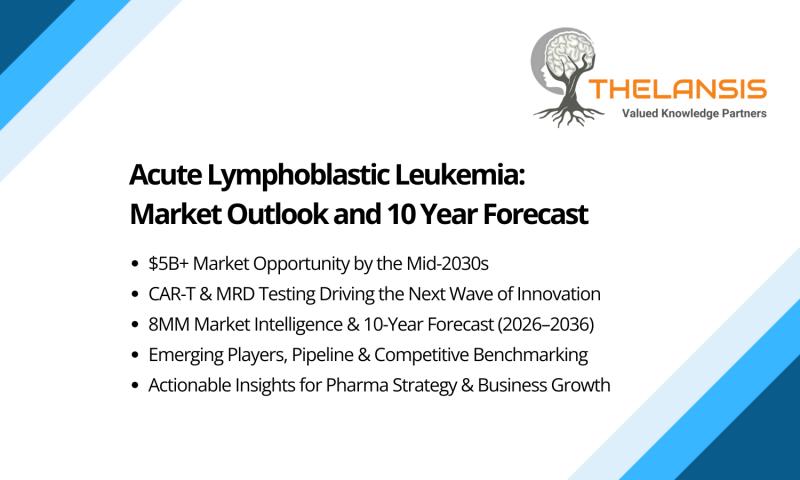
The Acute Lymphoblastic Leukemia (ALL) market is poised to soar past $5 billion by the mid-2030s, driven by a dramatic shift in treatment strategies towards cutting-edge CAR-T therapies and sophisticated precision diagnostics. This isn't just a gradual rise; it's a fundamental reshaping of how this aggressive blood cancer is fought, offering renewed hope for both children and adults battling the disease. Thelansis' market intelligence highlights this accelerating trend, noting the profound impact of CD19-directed CAR-T treatments and minimal residual disease (MRD)-guided decisions on patient outcomes. This growth signals a major departure from traditional multi-agent chemotherapy, which once dominated ALL treatment. New cellular and immune-based therapies, notably the FDA-approved CAR-T option Obecabtagene Autoleucel (AUCATZYL) in late 2024, are gaining significant traction, with strong commercial performance in 2025 and continued expansion through 2026. The increasing adoption of MRD testing is also critical, allowing doctors to detect hidden cancer cells after initial treatment and tailor therapy, including deciding on crucial interventions like stem cell transplantation or targeted drugs like blinatumomab. North America leads this therapeutic revolution, while the Asia-Pacific region is quickly catching up with its own rapid market growth. Looking ahead, the ALL therapeutics pipeline is brimming with innovative approaches, suggesting that personalized and highly effective treatments will only become more common. Watch for further advancements in dual-antigen CAR-T constructs and 'off-the-shelf' cell therapies aimed at improving durability, safety, and accessibility. The continued integration of precision diagnostics, including next-generation sequencing, will further refine treatment protocols, moving the field closer to truly individualized care and potentially improving long-term survival rates for patients worldwide.