Ancient Island Wolves Challenge Dog Domestication History, Revealing Early Human Bonds
Context mode is active. Hover over any highlighted term to see its definition. Click a nested term to go deeper.
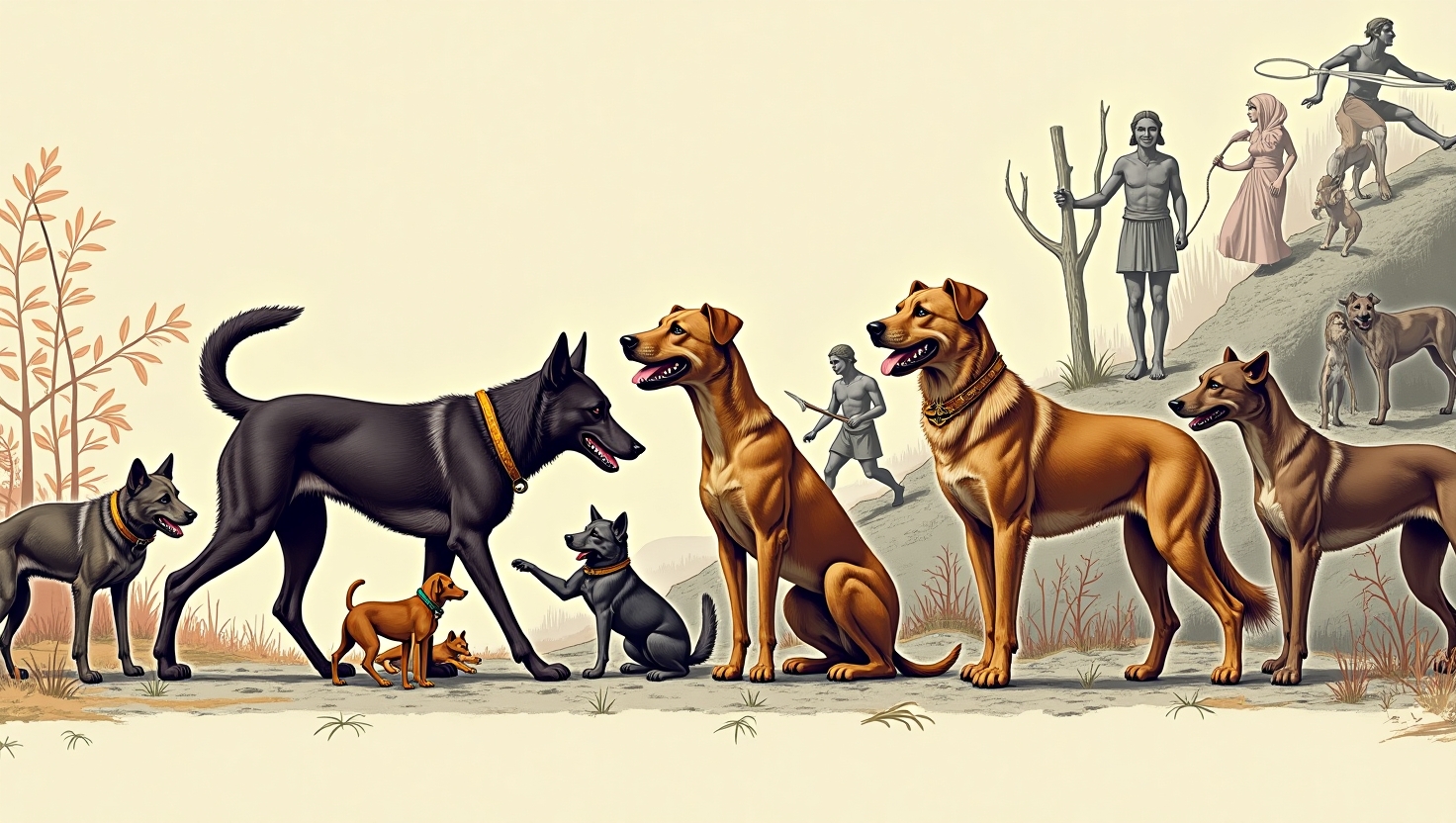
A groundbreaking study, published just yesterday, reveals that 5,000-year-old wolf remains found on a remote Swedish island are forcing scientists to rethink how humans first bonded with these animals. These ancient wolves, discovered on Stora Karlsö in the Baltic Sea, couldn't have reached the isolated island without human help, suggesting a relationship far more complex and hands-on than previously thought, long before dogs officially became 'man's best friend'. The discovery challenges the long-held belief that wolf domestication began purely through a gradual adaptation to human settlements. The research team, including experts from the Francis Crick Institute and Stockholm University, found evidence that these wolves ate a marine-rich diet, like seals and fish, which closely matched what the island's prehistoric human inhabitants consumed, indicating they were likely fed by people. Furthermore, one wolf showed unusually low genetic diversity and the animals were smaller than mainland wolves, hinting at a degree of human management or even selective breeding thousands of years before the full emergence of domestic dogs. This new understanding, detailed in the Proceedings of the National Academy of Sciences, opens up fresh avenues for exploring the nuanced history of human-animal interactions during the Neolithic and Bronze Ages. It suggests that the path to dog domestication was likely not a single event, but a series of diverse relationships where humans kept and even cared for wolves in various ways. Researchers will now continue to investigate these ancient canids to uncover more details about these surprising early bonds, potentially rewriting chapters of our shared evolutionary story.