Ancient Lake Sediments Reveal 25,000-Year Indian Monsoon Secrets for Future Climate Models
Context mode is active. Hover over any highlighted term to see its definition. Click a nested term to go deeper.
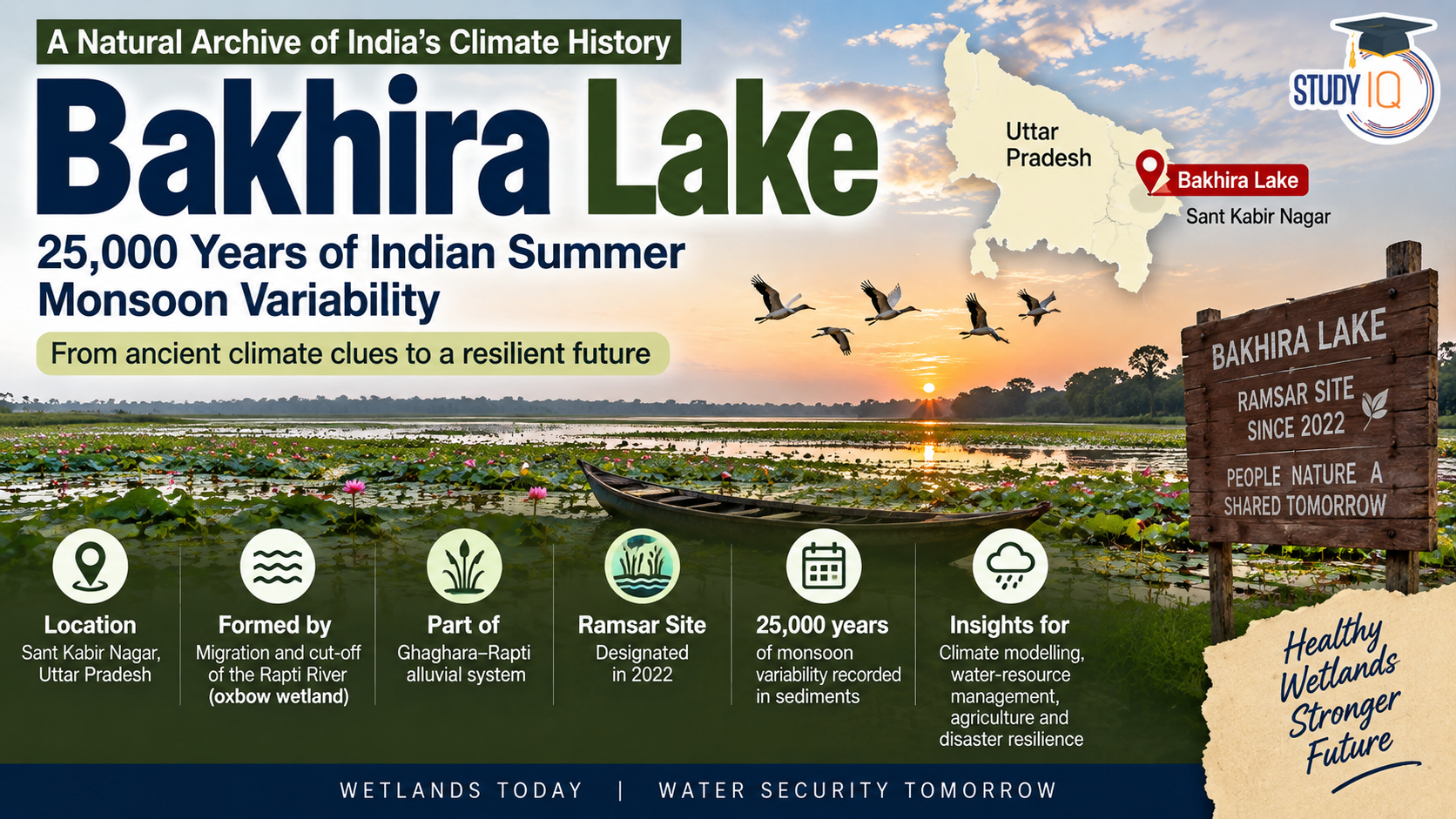
In a groundbreaking development, scientists from the Birbal Sahni Institute of Palaeosciences (BSIP) have just unveiled a 25,000-year historical record of the Indian Summer Monsoon (ISM), painstakingly extracted from ancient sediment core beneath Uttar Pradesh's Bakhira Lake. This unprecedented deep dive into the past monsoon variability, published on September 10, 2026, promises to dramatically improve our ability to predict future monsoon behavior and manage crucial water resources across the Central Ganga Plain. The research, a meticulous analysis of magnetic minerals, geochemical composition, and clay layers within the lakebed, offers a high-resolution timeline that distinguishes natural climate shifts from recent human-induced changes. By mapping ancient droughts during periods like the Younger Dryas and intense rainfall during the Holocene Climatic Optimum, the BSIP team provides a critical baseline for refining modern climate models, which is vital for India's agriculture and flood mitigation strategies. The study also highlights Bakhira Lake importance, a Ramsar Site since 2022, as a natural time capsule for the region. What's next? This invaluable paleoclimate data is set to become a cornerstone for policymakers and climate scientists. Expect a stronger push for integrating such long-term historical records into regional climate change adaptation plans, particularly for the agriculturally vital Central Ganga Plain. The findings underscore the urgency of preserving wetlands like Bakhira Lake, not just for biodiversity but as irreplaceable archives of our planet's climatic past, offering clues to secure India's water future.