Ancient 'Sengol' Sceptre Now a Textbook Star: Shaping India's Historical Narrative
Context mode is active. Hover over any highlighted term to see its definition. Click a nested term to go deeper.
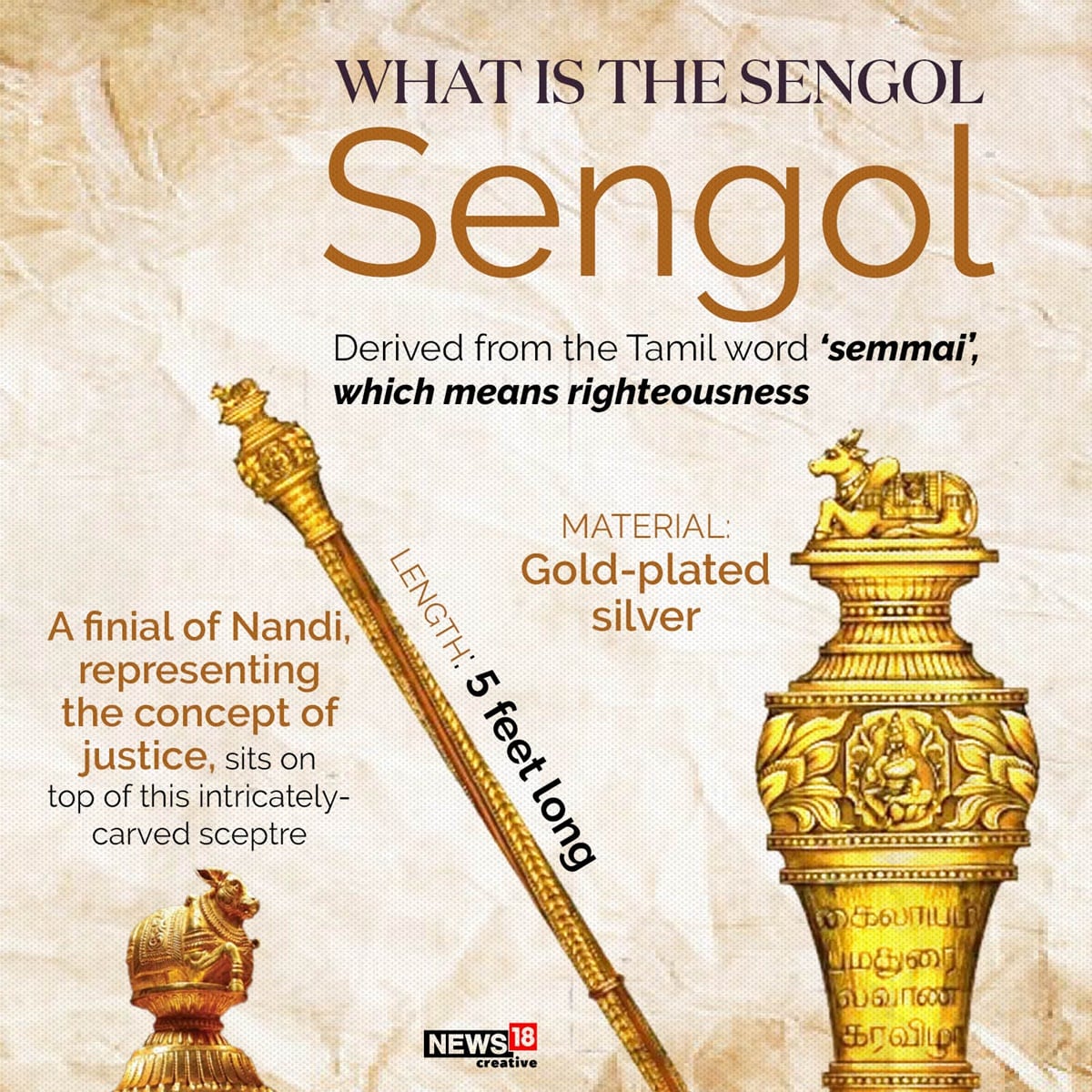
India's National Council of Educational Research and Training (NCERT) has officially included the historic Sengol sceptre in its Class 9 Social Science textbook, 'Understanding Society India and Beyond-Part 2', marking a significant shift in the national curriculum. The textbook frames the Sengol as a 'cultural marker of rulership and good governance,' tracing its origins back to the ancient Chola dynasty and highlighting its symbolic association with India's Independence in 1947. This move, following the Sengol prominent installation in the new Parliament building in May 2023, firmly places the artefact at the forefront of students' historical understanding. The textbook elaborates on the Sengol connection to the transfer of power, noting its presentation to India's first Prime Minister, Jawaharlal Nehru, by Adheenam saints on the eve of Independence. This narrative underscores the idea of a 'civilisationally rooted' transition from colonial rule to a sovereign Indian state, aligning with the government's interpretation of the sceptre's historical significance. However, this inclusion also revives a long-standing debate among historians, with some, like Rajmohan Gandhi, questioning the extent of documented evidence formally presenting the Sengol as a direct symbol of the transfer of power in 1947, suggesting its initial public impact was negligible and it was later housed in the Allahabad Museum for decades. As this revised curriculum rolls out, it's set to shape how millions of Indian students perceive critical moments in their nation's history and the foundational principles of governance. The emphasis on the Sengol Chola lineage and its link to righteous rule could foster a deeper appreciation for indigenous traditions in statecraft, potentially sparking further public discourse and academic scrutiny on historical interpretations. Educators and policymakers will be keenly watching the reception of these new narratives in classrooms, as they navigate the evolving landscape of India's national story.