Arctic's New Silk Road: Russia Fast-Tracks Energy Lifeline Amid EU LNG Shift
Context mode is active. Hover over any highlighted term to see its definition. Click a nested term to go deeper.
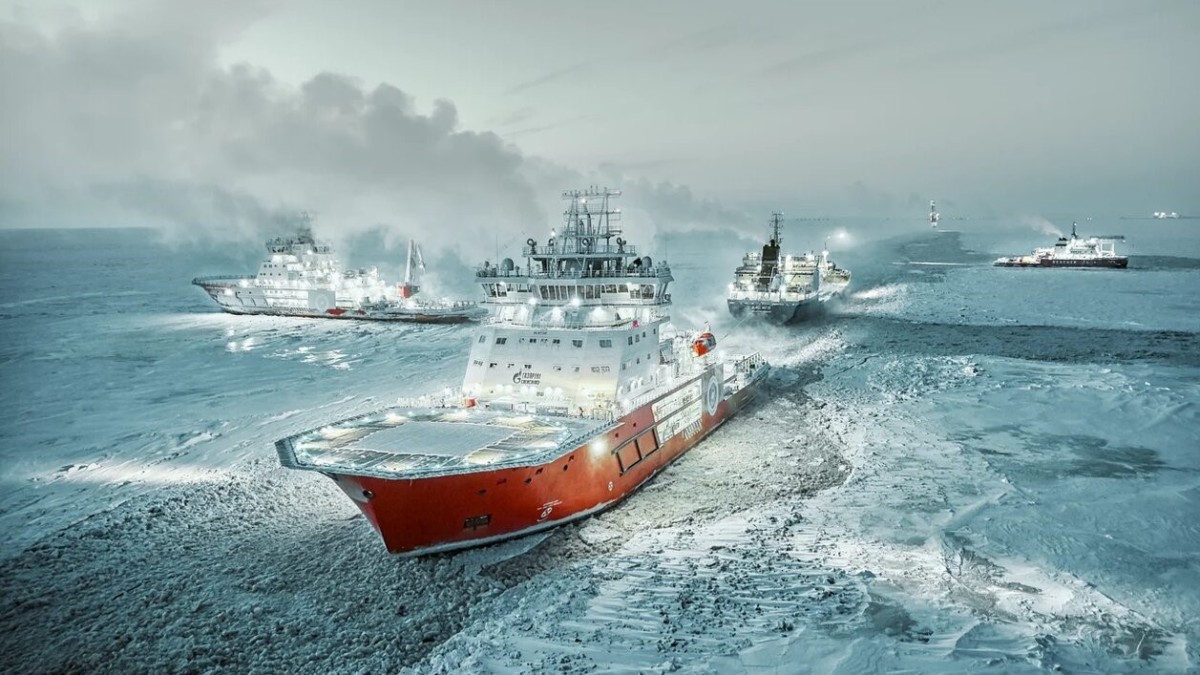
Russia is aggressively accelerating its Arctic energy strategy, with the massive Vostok Oil project now officially commissioned and its first crude oil shipments departing from the new Bukhta Sever Port. This move dramatically pushes forward Moscow's ambition to transform the Northern Sea Route (NSR) into a vital, year-round Trans-Arctic Transport Corridor, a direct and hastened pivot eastward as Europe's January 2027 ban on Russian LNG imports looms, though with some recently softened rules for third-country transfers. This strategic redirection is a high-stakes play to bypass traditional maritime chokepoints controlled by Western alliances, securing a shorter, more direct energy conduit to burgeoning Asian markets. The Vostok Oil project, spearheaded by state giant Rosneft, is central to this vision, promising to boost crude oil traffic significantly alongside existing Liquefied Natural Gas (LNG) volumes from facilities like Yamal LNG. However, this grand plan, projected to cost over $400 billion by 2035, heavily relies on attracting substantial foreign investment, particularly from China, amidst a landscape of persistent Western sanctions. Looking ahead, Russia aims for year-round navigation on the NSR by 2025-2030, supported by a growing fleet of ice-class tankers and advanced infrastructure. The success of this ambitious Arctic gambit will hinge on overcoming immense operational challenges posed by the harsh environment, securing the necessary foreign capital in a complex geopolitical climate, and managing the environmental impact on the fragile Arctic ecosystem. The unfolding developments will redefine global energy flows and maritime trade for decades.