Assam Faces 'Unimaginable' Deluge: CM Sarma Leads Boat Survey as Death Toll Hits 50
Context mode is active. Hover over any highlighted term to see its definition. Click a nested term to go deeper.
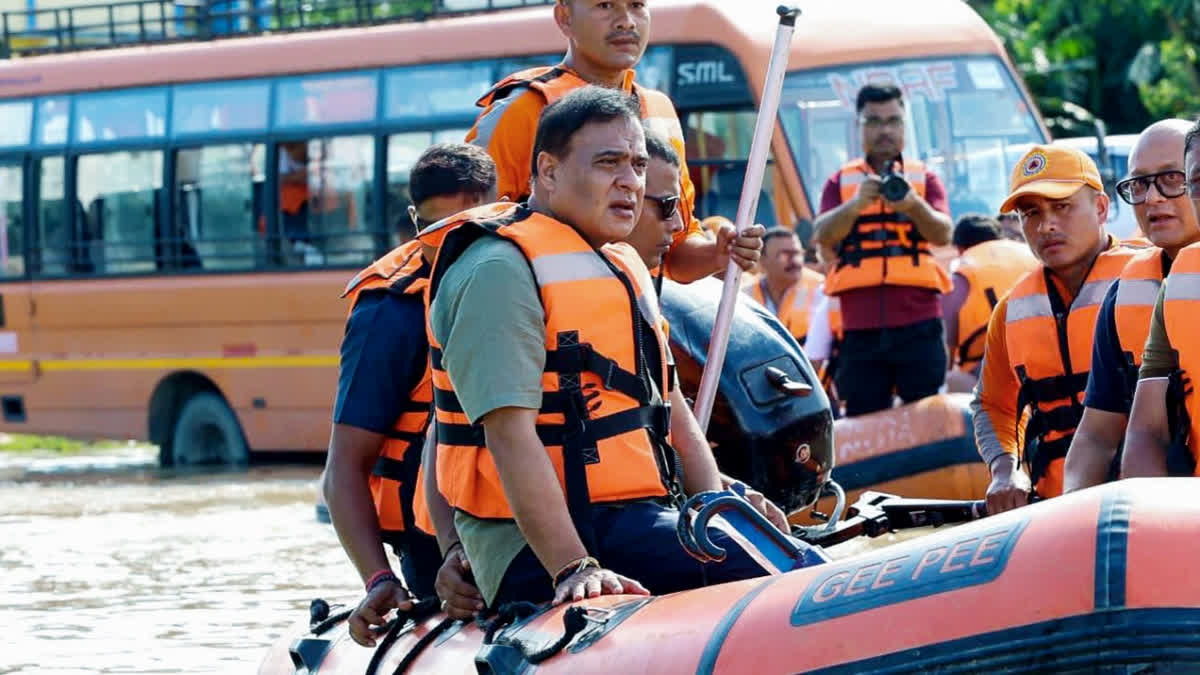
Assam Chief Minister Himanta Biswa Sarma personally navigated the inundated districts of Sivasagar, Charaideo, and Jorhat by boat this Wednesday, confronting an 'unimaginable' flood crisis that has tragically claimed at least 47 lives and affected over 7.21 lakh (721,000) people across 11 districts. Sivasagar remains the epicenter of the devastation, with the Dikhow River flowing dangerously above severe flood levels, leaving countless villages submerged and raising fears of a rising death toll as around 40 individuals are still reported missing. The unprecedented scale of this disaster is largely attributed to severe cloudburst upstream in neighboring Nagaland, combined with localized rainfall that was a staggering 436% above normal. This has not only overwhelmed the Brahmaputra River and its tributaries but has also significantly impacted urban centers like Sivasagar town and disrupted crucial economic activities, including oil and gas operations and tea estates, signaling potentially Assam most expensive flood event to date. Multiple agencies, including the National Disaster Response Force (NDRF), State Disaster Response Force (SDRF), Indian Army, and Indian Air Force, are relentlessly engaged in rescue and relief operations, even deploying drones to reach cut-off areas. As relief efforts intensify, the focus now shifts to long-term recovery, with a central government team scheduled to arrive on July 25 to assess the damage and formulate a comprehensive rehabilitation package. Chief Minister Sarma has also expressed plans for structured dialogue with neighboring states to enhance coordination mechanisms against future upstream calamities. The immediate challenge remains reaching all affected families with essential supplies and bracing for more heavy rainfall forecast until July 30, underscoring the urgent need for robust disaster preparedness in a region increasingly vulnerable to climate change-induced extreme weather events.