Australian Economy Weathers Global Storms, Shows Unexpected Resilience in Q2
Context mode is active. Hover over any highlighted term to see its definition. Click a nested term to go deeper.
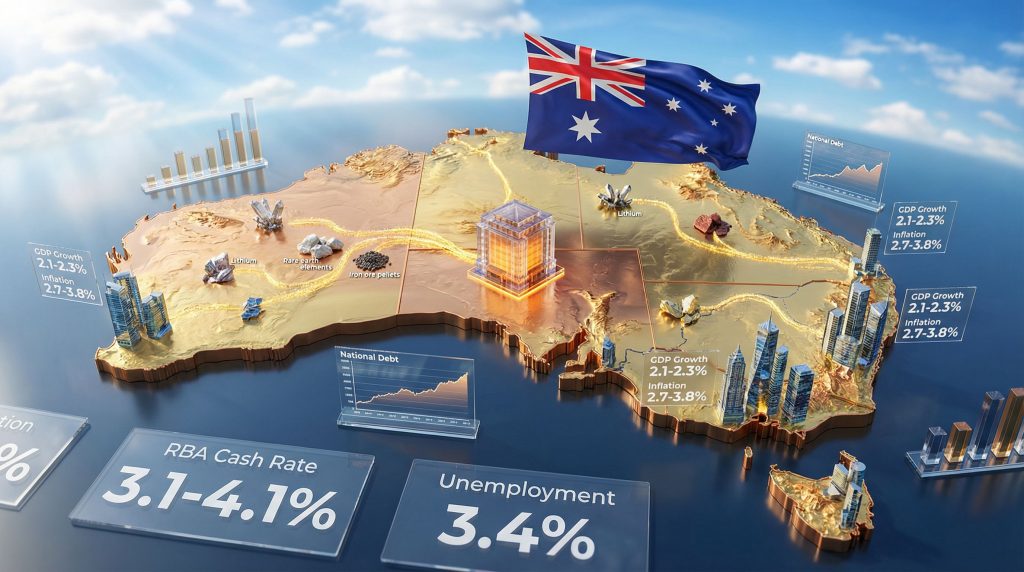
Westpac's latest Nowcast reveals Australia's economy grew by a modest 0.2% in the second quarter of 2026, a surprisingly resilient outcome given persistent global threats and tight monetary policy. This final estimate for Q2 2026, largely consistent with earlier projections, indicates the nation is navigating a tricky period better than many anticipated, sidestepping a deeper economic dip. The economy's ability to 'weather the storm' comes despite ongoing fallout from the Middle East conflict, which earlier in 2026 disrupted vital trade routes like the Strait of Hormuz and significantly impacted Brent crude prices, driving global inflation concerns. Domestically, higher interest rates, with the Reserve Bank of Australia lifting its cash rate to 4.35% by May, have continued to weigh on household budgets and consumer spending, particularly for mortgage holders, whose savings buffers are increasingly eroding. Looking ahead, Westpac's data suggests the probability of a negative quarter for Q3 2026 has fallen to around 9-10%, signaling a potential stabilization and a move towards more trend-like growth. This apparent resilience gives the RBA room to remain focused on taming inflation without immediately worrying about a 'hard landing' for growth, with current forecasts expecting rates to hold steady through 2026. However, the delicate balancing act between managing inflation, global uncertainties, and subdued consumer demand will keep policymakers on high alert.