BJD Challenges New Anti-Paper Leak Law: Enforcement, Not Just Legislation, is Key
Context mode is active. Hover over any highlighted term to see its definition. Click a nested term to go deeper.
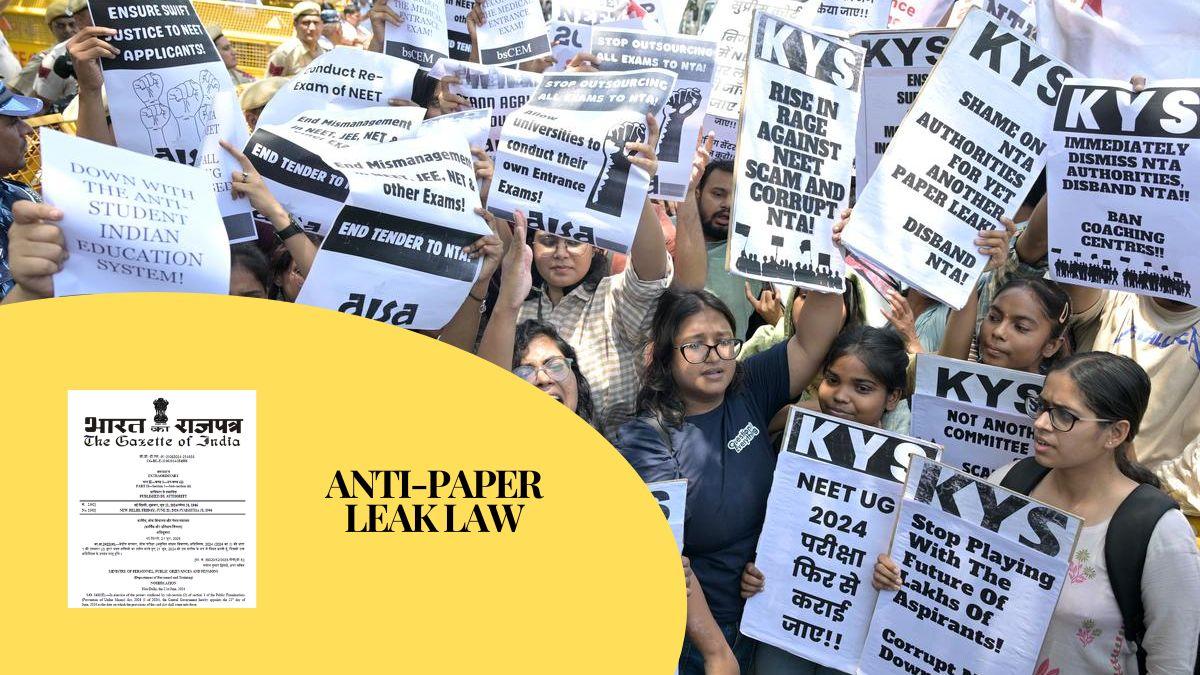
Odisha's opposition Biju Janata Dal (BJD) has sharply questioned the efficacy of the Union Government recently amended anti-paper leak law, arguing that mere legislation won't solve the deep-seated problem without rigorous and impartial enforcement. This critical stance comes just hours after the Union Cabinet approved significant amendments to the Public Examinations (Prevention of Unfair Means) Act, 2024, amidst ongoing national outrage and widespread student protests over recent examination malpractices, particularly the NEET-UG paper leak. BJD spokesperson Lenin Mohanty emphasized that strict action against offenders is paramount, warning that without it, the new law risks becoming another 'paper tiger.' The Union Cabinet decision on July 24, 2026, to strengthen the Public Examinations Act, 2024, proposes harsher penalties, including up to 10 years imprisonment and a ₹10 crore fine for organized paper leak, alongside establishing fast-track courts for speedy trials. This move directly responds to a wave of student protests ignited by several high-profile paper leak incidents, including the NEET-UG 2026 debacle, which led to its cancellation and a CBI probe. However, the BJD critique is rooted in real-world experience; Mohanty pointed to the Odisha Public Examinations (Prevention of Unfair Means) Act, 2024, claiming that despite its enactment by the Odisha Assembly, 23 paper leak incidents have occurred under the BJP government in Odisha in the last two years without a single conviction. As the amended bill heads to Parliament, likely for consideration during the Monsoon Session starting July 27, 2026, the spotlight shifts to legislative debate and the formidable challenge of effective implementation. While the Union Government aims to restore faith in India's competitive examination system and the National Testing Agency (NTA) has even terminated 47 officials amid reforms, the BJD concerns highlight that legal frameworks are only as good as their enforcement. The coming weeks will reveal if the enhanced penalties and judicial mechanisms can truly deter the 'education mafia' and bring accountability to a system plagued by repeated leaks.