BJP's Holy Water Bike Yatras Begin in Gujarat, Eyeing Modi's Milestones and Future Polls
Context mode is active. Hover over any highlighted term to see its definition. Click a nested term to go deeper.
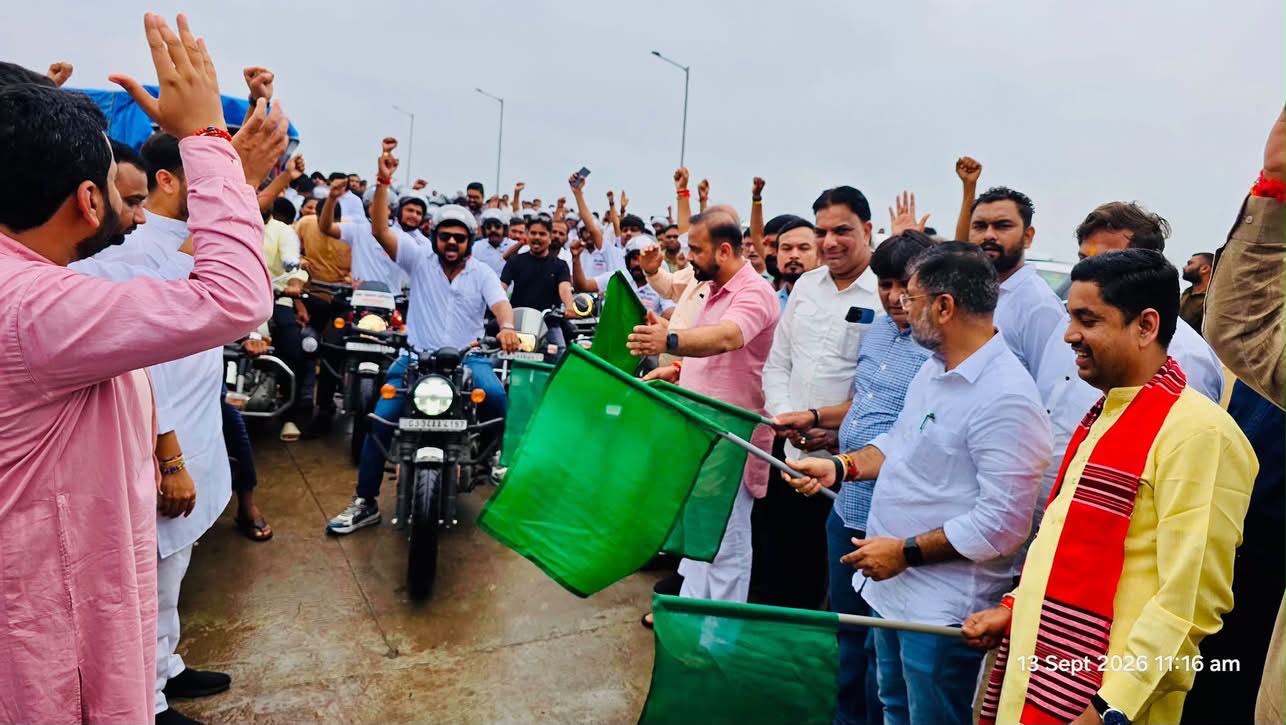
In a significant blend of religion and politics, the Bharatiya Janata Party (BJP) today launched four 'bike yatras' from prominent shrines across Gujarat. Around 500 party workers, riding 250 motorcycles, set off carrying holy water, destined for Vadnagar, Prime Minister Narendra Modi birthplace, as part of the party's extensive 'Seva Sankalp Abhiyan' campaign. This highly visible initiative, which began on Sunday, September 13, is designed to converge in Vadnagar on September 16 before embarking on a symbolic journey to Varanasi, Modi's parliamentary constituency, linking his 'janmabhoomi' (birthplace) with his 'karmabhoomi' (workplace). The yatras, originating from revered sites like Somnath and Pavagadh, will see collected holy water used for a 'jalabhishek' at Vadnagar Hatkeshwar Mahadev Temple and added to Sharmishtha Lake, before being carried to Varanasi for another 'jalabhishek' at the Kashi Vishwanath Temple. This forms a crucial part of the month-long 'Seva Sankalp Abhiyan', running from September 17 to October 17, which marks Prime Minister Modi's 25 years in public service, including his long tenure as Gujarat Chief Minister and 12 years as Prime Minister. Beyond spiritual symbolism, the campaign is a strategic grassroots outreach, aiming to connect with voters and showcase government achievements ahead of the 2027 state Assembly elections in key states like Uttar Pradesh and the 2029 Lok Sabha elections. The BJP plans to extend this outreach with parallel yatras from Varanasi to Vadnagar, cleanliness drives, and 'Seva Setu' camps to assist citizens with government schemes. This multi-faceted campaign underscores the BJP relentless focus on electoral preparedness and reinforcing its nationalist narrative, especially following significant state election victories in 2026. Observers will be closely watching how these politically charged religious journeys resonate with the electorate and shape the political discourse in the run-up to future polls, particularly in the electorally crucial states of Gujarat and Uttar Pradesh.