Brain Implant Restores Lasting Movement, Touch to Paralysed Man, Rewiring Nervous System
Context mode is active. Hover over any highlighted term to see its definition. Click a nested term to go deeper.
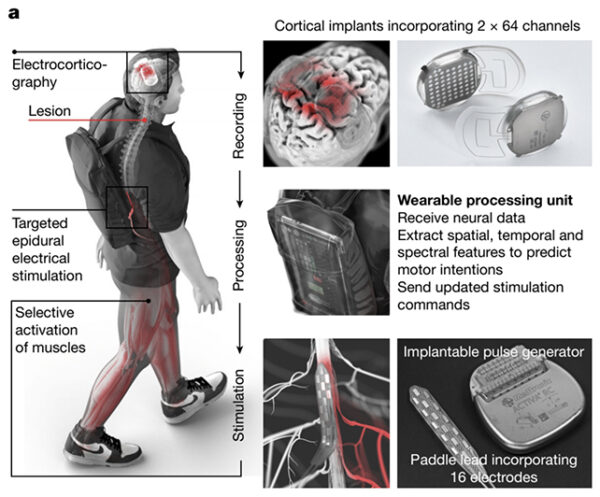
In a truly groundbreaking medical advancement, a paralyzed man has regained not only partial movement but also the sensation of touch in his hand, thanks to an innovative 'double neural bypass' brain implant system. This breakthrough, developed by researchers at the Feinstein Institutes for Medical Research, goes beyond just temporary assistance; it appears to be actively rewiring the nervous system, offering a new beacon of hope for millions living with severe spinal cord injuries worldwide. The system centers on a brain-computer interface (BCI) that combines artificial intelligence (AI) with precisely targeted electrical stimulation. Five microelectrode arrays surgically implanted in patient Keith Thomas brain decode his intentions to move, while AI translates these signals to stimulate his forearm muscles, enabling movement. Crucially, force sensors on a custom 3D-printed brace then feed pressure data back to his sensory cortex, creating the feeling of touch – a two-way communication previously unseen in such systems. This intricate closed-loop mechanism, led by Dr. Chad Bouton, allowed Thomas, who was paralyzed in a 2020 diving accident, to perform daily tasks like feeding himself, drinking from a cup, and even delicately handling eggshells with remarkable accuracy. What makes this development especially significant, as detailed in the prestigious journal Nature Medicine, is the evidence of neuroplasticity; Thomas's gains in strength and sensation persisted for months, and even more than two years in a recent follow-up, after the system was turned off, suggesting genuine neurological recovery rather than just device-dependent function. This long-term 'rewiring' opens up exciting possibilities for future therapeutic applications and wider clinical trials, potentially transforming rehabilitation strategies for those with complete tetraplegia and other severe forms of paralysis. The scientific community will be keenly watching as this pioneering technology moves towards broader testing.