BRICS Greenlights Grain Exchange, Targeting Global Food Security and Dollar-Free Trade
Context mode is active. Hover over any highlighted term to see its definition. Click a nested term to go deeper.
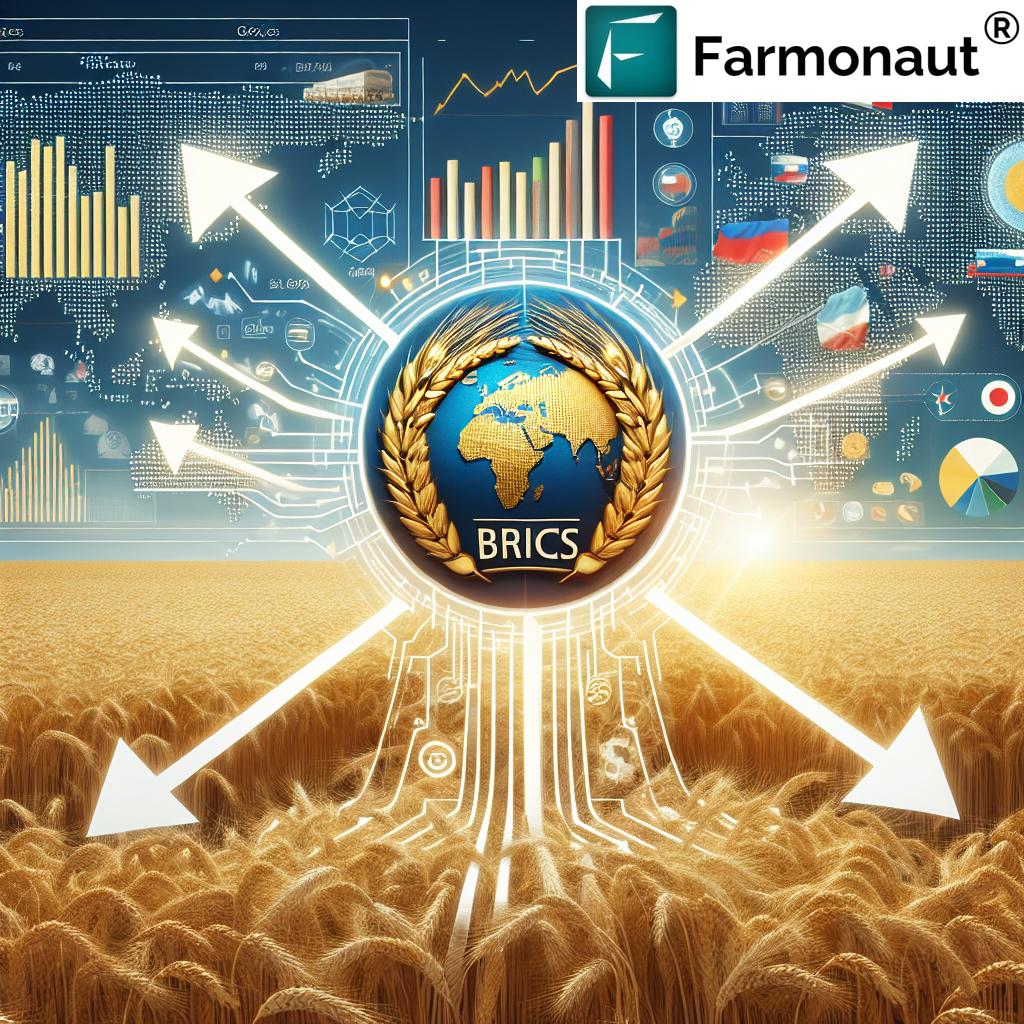
The BRICS bloc has officially endorsed the creation of a BRICS Grain Exchange, a major outcome of the recently concluded New Delhi Declaration at the 18th BRICS Summit. This move, heavily championed by Russia, signals a concrete step towards establishing an independent agricultural trading platform designed to reduce reliance on Western-dominated commodity exchange and the US dollar for global food transactions. With a pilot program slated for this year and full operations by 2027, the initiative aims to reshape agricultural trade dynamics for a significant portion of the world. This push for an alternative exchange comes amidst heightened global food price volatility and supply chain disruptions, emphasizing the urgent need for enhanced food security among BRICS members. The proposal, initially made by Russia Union of Grain Exporters and Producers in late 2023 and backed by President Vladimir Putin in 2024, seeks to create independent price benchmarks and facilitate direct trade in local currencies. The expanded BRICS group now encompasses 11 nations, collectively accounting for roughly 42% of the world's agricultural land and global grain production, highlighting the immense potential for intra-bloc agricultural trade, which could eventually exceed US$1 trillion annually. With a conceptual model already prepared and technological requirements under development, the BRICS Grain Exchange is set to launch its pilot phase in 2026, targeting full-fledged operations by 2027. Beyond grain, there's potential for the platform to expand to other agricultural products and commodities, further strengthening the Global South position in global markets. India, as the 2026 BRICS Chair, has also steered the bloc towards other agricultural initiatives, including the establishment of the BRICS AGRIN (Agro-Inputs, Genetic Resources, and Information Network), underscoring a holistic approach to building resilient agricultural systems.