BRICS Summit Delhi: Navigating Global Crises, Reforming Governance, and Defying Unilateralism
Context mode is active. Hover over any highlighted term to see its definition. Click a nested term to go deeper.
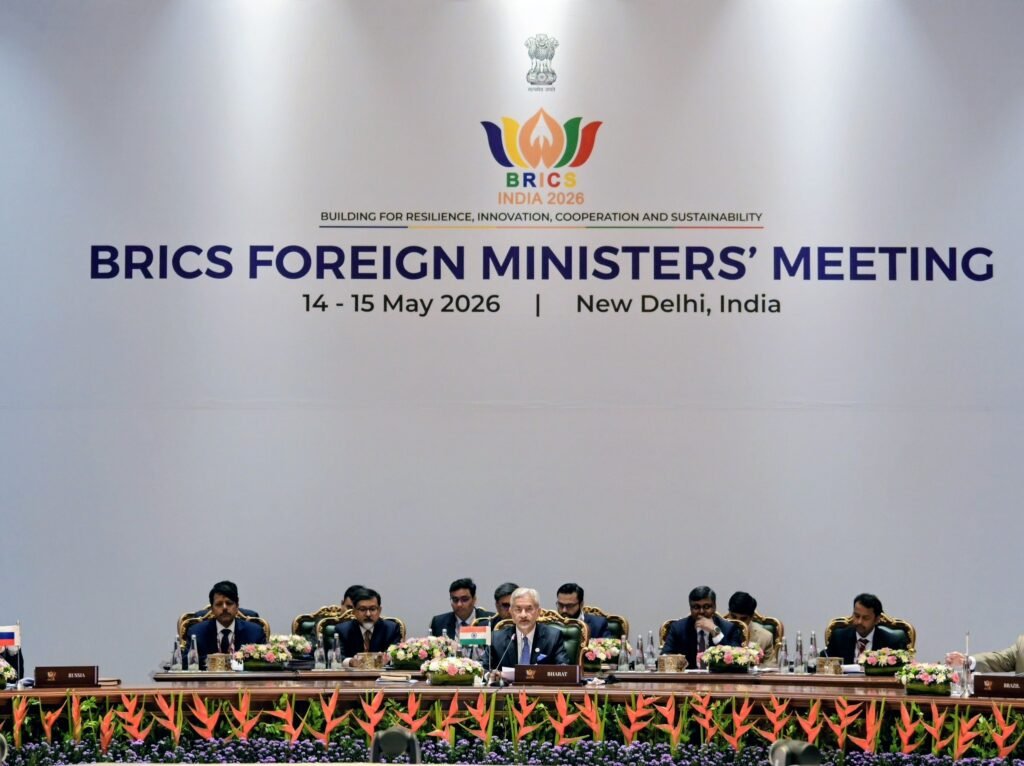
The 18th BRICS Summit in New Delhi has concluded with the unanimous adoption of the New Delhi Declaration, a 140-paragraph consensus document that meticulously navigates contentious global issues from the Gaza conflict to US tariffs, while notably omitting any direct mention of the Russia-Ukraine war. The declaration highlights a delicate diplomatic balancing act, particularly in addressing the ongoing tensions between member states Iran and the UAE, and reaffirms the bloc's commitment to a more inclusive and reformed global governance structure. The summit, operating under India's 2026 chairship and the theme 'Building for Resilience, Innovation, Cooperation and Sustainability', saw leaders from the expanded 11-member bloc tackle complex geopolitical and economic challenges. A key diplomatic breakthrough was brokered by India between Iran and the UAE, who have been at odds due to a US-Israeli military campaign against Iran and subsequent regional disruptions, including impacts on the crucial Strait of Hormuz. The declaration also strongly condemned unilateral tariff measures without directly naming the United States, reflecting growing frustration with protectionist policies, and expressed deep concern over the continued violence in Gaza, advocating for a two-state solution and unhindered humanitarian aid. Looking ahead, BRICS is set to push for urgent reforms to the UN Security Council, aiming for greater representation for the Global South, a call echoed from the 2025 Rio Summit. The bloc also solidified its stance against terrorism, condemning the April 2025 Pahalgam attack in India and reiterating a 'zero tolerance' approach. The outcomes signal BRICS' ambition to reshape the international order, emphasizing dialogue, multilateralism, and economic cooperation, with future efforts focusing on translating these declarations into concrete institutional and policy changes.