Caltech Unveils Stunning 27-Year Video of Blazar Jet, Revealing New Black Hole Secrets
Context mode is active. Hover over any highlighted term to see its definition. Click a nested term to go deeper.
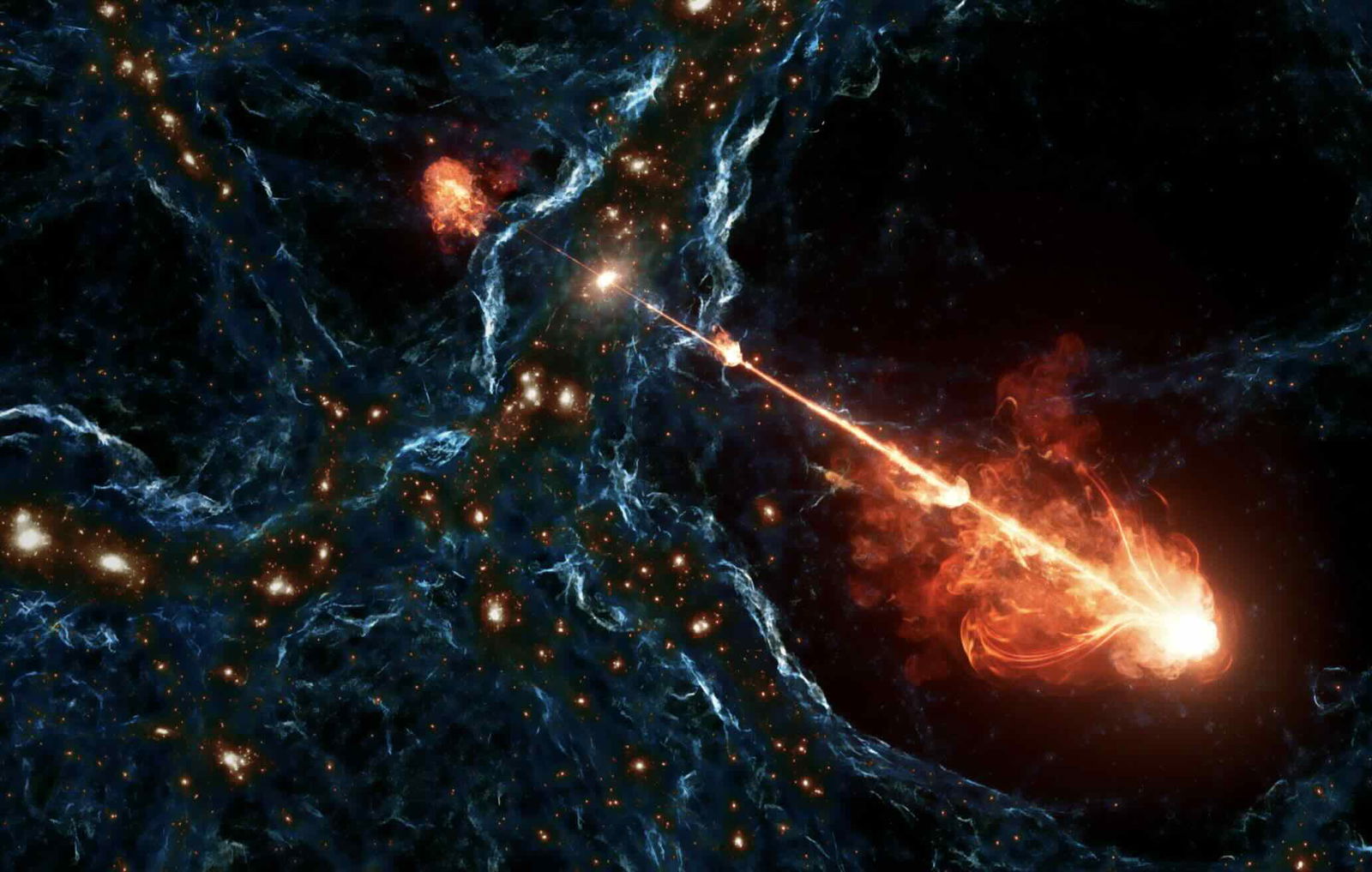
Caltech astronomers have just released an incredible 27-year video showing a powerful plasma jet blasting from a distant blazar, 3C 345, directed right towards Earth. This breakthrough, led by Dr. Marianna Foschi and her team, uses a new 'kine' algorithm to reveal the jet's inner movements with amazing detail, showing different parts of the plasma flowing at varying speeds without the expected shock waves. This high-resolution footage, published in the prestigious journal Nature, marks a significant leap in how we study the universe's most extreme phenomena, giving us our clearest look yet at these cosmic powerhouses. This new visualization dramatically changes our understanding of blazar, which are a type of active galactic nuclei where supermassive black hole launch jets of matter at nearly light speed. For decades, studying these jets has been limited to snapshots, making it hard to see their complex, fast-moving internal dynamics. By weaving together observational data collected over nearly three decades through the MOJAVE program and using advanced neural fields, Caltech 'kine' algorithm allows scientists to see the plasma flow in motion, providing crucial insights into how these colossal black holes affect their host galaxies and the larger universe. The development of the 'kine' algorithm means astronomers can now dig much deeper into the mechanics of these relativistic jets. This new tool promises to unlock more secrets about how supermassive black hole grow and shape the early universe, potentially leading to a better understanding of gravity and spacetime. Future observations using this video reconstruction technique will continue to push the boundaries of astronomy, offering an unprecedented view into the dynamics of the cosmos and perhaps revealing even more unexpected findings.