Central Bank Marathon Ahead: Fed, BoJ, BoE, and RBA Decisions in Focus
Context mode is active. Hover over any highlighted term to see its definition. Click a nested term to go deeper.
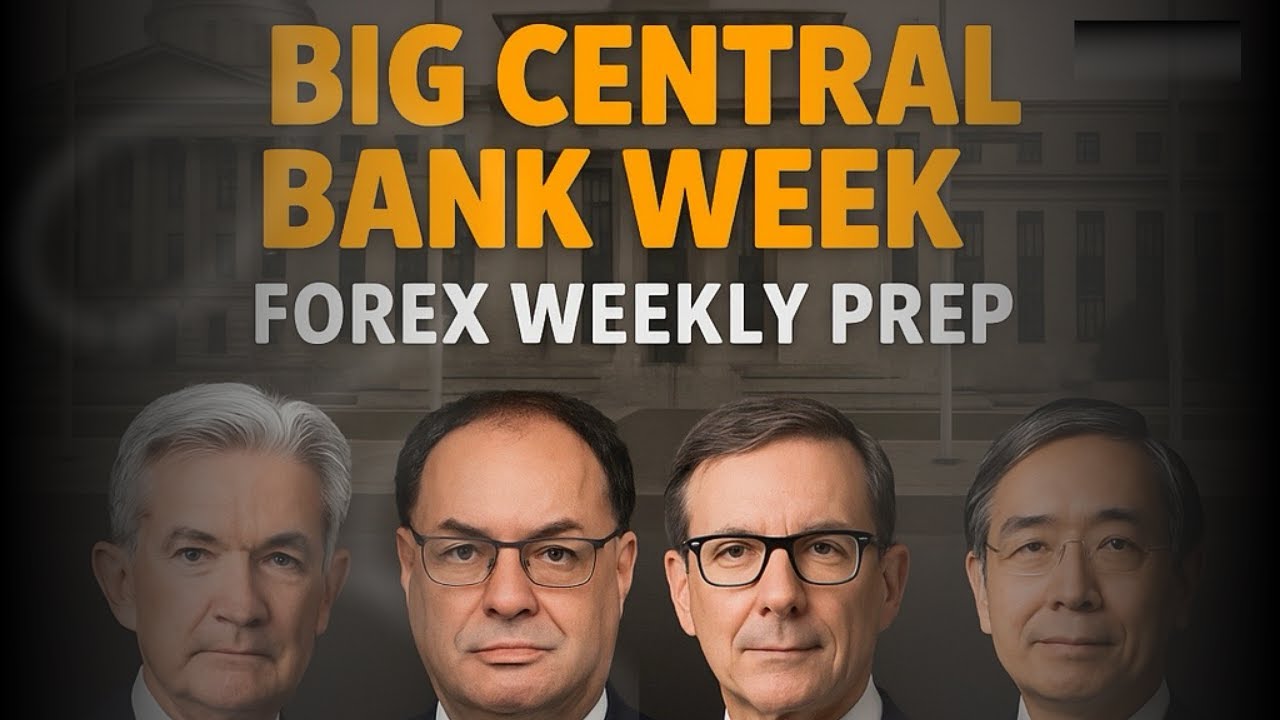
Global financial markets are on high alert this week as four of the world's most pivotal central banks – the Federal Reserve, Bank of Japan, Bank of England, and Reserve Bank of Australia – convene for a rapid-fire series of monetary policy decisions. The stakes are exceptionally high, with an expected rate hike from the BoJ, a potential hawkish pivot from the Fed, and critical forward guidance anticipated from the BoE and RBA, all set against a backdrop of persistently elevated global inflation and a volatile geopolitical landscape. The "central bank marathon" unfolds amid a complex global economic environment, primarily driven by the lingering inflationary impact of the Middle East conflict, which continues to prop up oil prices and disrupt supply chains. While the Bank of Japan is all but guaranteed to raise its policy rate to a 30-year high of 1% to combat stubborn inflation and a sharply depreciating yen, the Federal Reserve under new Chair Kevin Warsh is expected to signal a decisive shift away from its prior easing bias, with markets pricing in a 50.5% chance of a rate hike later in 2026. Meanwhile, the Bank of England is widely expected to hold rates at 3.75% despite robust internal debate and forecasts of inflation peaking at 3.6%, while the Reserve Bank of Australia, having already enacted three hikes this year, is likely to pause at 4.35% but will be scrutinizing inflationary pressures, especially the 4.8% headline inflation expected for Q2 2026. Investors will be parsing every syllable of the upcoming statements and press conferences for cues on the future trajectory of global interest rates and potential currency market volatility, particularly for the yen and sterling. The synchronized yet often divergent actions of these economic heavyweights will dictate capital flows and risk sentiment in the coming months, with any unexpected moves likely to trigger significant market recalibrations as policymakers grapple with the tightrope walk between curbing inflation and safeguarding fragile economic growth.