China's Classrooms Go Full AI: Personalized Learning for 220 Million Students
Context mode is active. Hover over any highlighted term to see its definition. Click a nested term to go deeper.
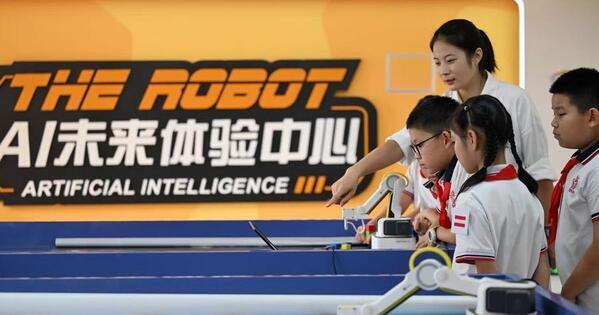
Classrooms across China are rapidly transforming, with AI-powered 'agents' now personalizing education for students on a massive scale. At Beijing No. 13 Secondary School, for instance, these AI tools are already analyzing student data, from classroom participation to quiz results, to create custom question sets and homework assignments in real-time, moving away from the old 'one-size-fits-all' teaching style. This isn't a small experiment; it's part of China's ambitious national 'AI+Education Action Plan,' launched in April 2026 by the Ministry of Education and four other government bodies. The plan aims to embed AI across the entire education system, from kindergarten through lifelong learning, by 2030, impacting over 220 million students in the world's largest basic education system. The government sees this as a crucial step to future-proof its workforce and enhance AI literacy nationwide, emphasizing a shift towards higher-quality, individualized instruction. While the push for AI in education promises tailored learning and greater efficiency, it also raises important questions. Educators and lawmakers are closely monitoring concerns about potential over-reliance on AI, which could hinder students' critical thinking and independent problem-solving skills, alongside vital issues like data privacy and ethical AI use. The goal is for teachers to become 'designers of learning experiences' and 'guardians of technological ethics,' guiding students to harness AI thoughtfully rather than becoming passive users.