China's J-20 Designers Propose Radical Wing-Mounted Radar for Next-Gen Air Surveillance
Context mode is active. Hover over any highlighted term to see its definition. Click a nested term to go deeper.
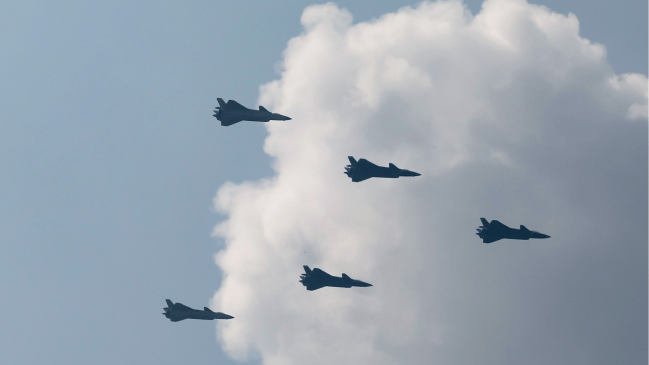
Chinese military aircraft designers, the same brilliant minds behind the J-20 stealth fighter, have unveiled a groundbreaking concept: embedding large radar systems directly into aircraft wings. This isn't just a minor tweak; their proposal suggests that by simply changing an aircraft's 'flight attitude'—think of it as tilting the plane in the air—these wing-mounted radar could redirect their coverage, fundamentally expanding airborne surveillance capabilities. Published in a Chinese journal on October 10, this idea could redefine how fighter jets gather intelligence and detect threats. This revolutionary approach, put forward by researcher Ren Yunsong and his team from the AVIC Chengdu Aircraft Design and Research Institute, directly challenges the traditional method of housing bulky radars in a fighter's nose or on top of early-warning aircraft. It's part of a broader shift towards 'distributed air combat,' where smaller, more agile Unmanned Aerial Vehicles (UAVs) can work together in coordinated formations to cover vast areas. The J-20S, a two-seat variant of China's most advanced stealth fighter, is already designed to operate alongside drones, making it a potential command hub for this networked surveillance system. This move underscores China's aggressive push for air superiority and advanced military technology in a rapidly evolving geopolitical landscape. While currently a research proposal and not yet confirmed for deployment, the potential implications are enormous, hinting at a future where stealth fighter possess unprecedented situational awareness without compromising their low-observability. If successful, this technology could offer a significant strategic advantage, enhancing long-range detection in complex aerial battlefields. We'll be watching closely to see if this concept moves from paper to prototype, potentially altering the balance of air power and surveillance tactics for years to come.