China's Missile Test in South Pacific Ignites Regional Outcry, Strains Alliances
Context mode is active. Hover over any highlighted term to see its definition. Click a nested term to go deeper.
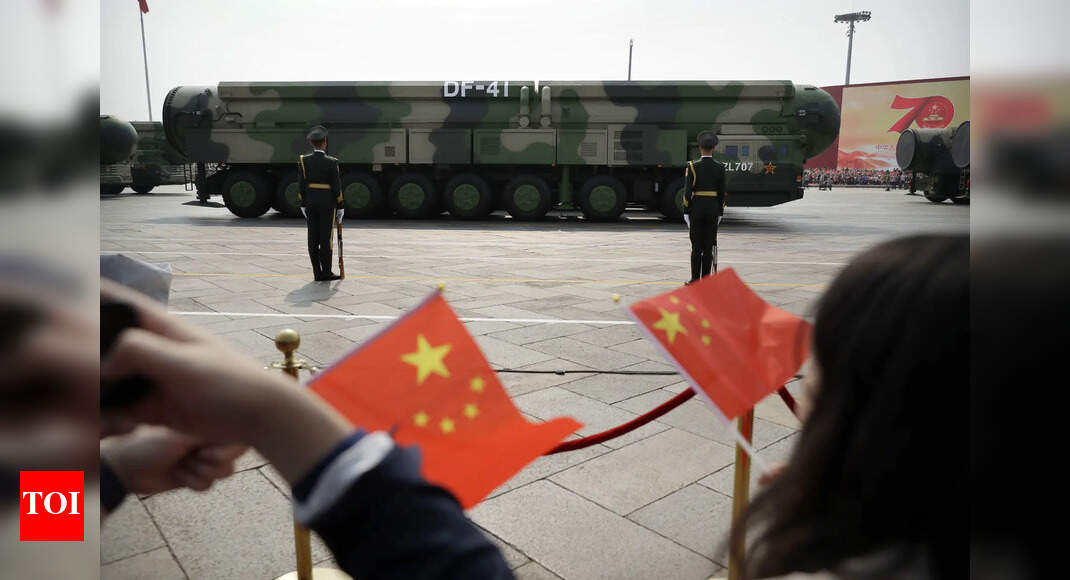
China's military has test-launched a long-range ballistic missile from one of its nuclear-powered submarine into the South Pacific Nuclear Free Zone, drawing sharp criticism from regional powers like Australia and New Zealand. The missile, carrying a dummy warhead, was fired on Monday, July 6, 2026, at 12:01 p.m. local time, according to China's official Xinhua News Agency. This action marks a notable military display in a sensitive region and comes after China reportedly gave only hours' notice to some countries, sparking concerns about transparency and regional security. The timing of the test is crucial, happening just hours after Australia and Fiji signed a new 'Ocean of Peace alliance,' a mutual defense treaty widely seen as a direct effort to counter Beijing's growing influence in the Pacific. While China stated the launch was routine training and not aimed at any specific target, the firing into a zone established by the Treaty of Rarotonga, which China itself ratified, has raised questions about its commitment to nuclear non-proliferation in the region. New Zealand's Foreign Minister Winston Peters called the event 'deeply concerning,' emphasizing that Pacific nations do not want their ocean used for missile testing. This incident is the first such missile test by China in the Pacific in two years, and it's likely to intensify the ongoing geopolitical tussle for influence in the region. Observers will be watching for stronger condemnations from international bodies and how the United States, a key ally in the Pacific, responds to this latest display of China's military modernization. The event also coincides with China's annual joint naval exercises with Russia, further highlighting Beijing's strategic posturing on the global stage and its rapid expansion of nuclear-capable weapons.