Cosmic Bells Ring: Gravitational Waves Reveal Black Hole Secrets and Dark Matter Clues
Context mode is active. Hover over any highlighted term to see its definition. Click a nested term to go deeper.
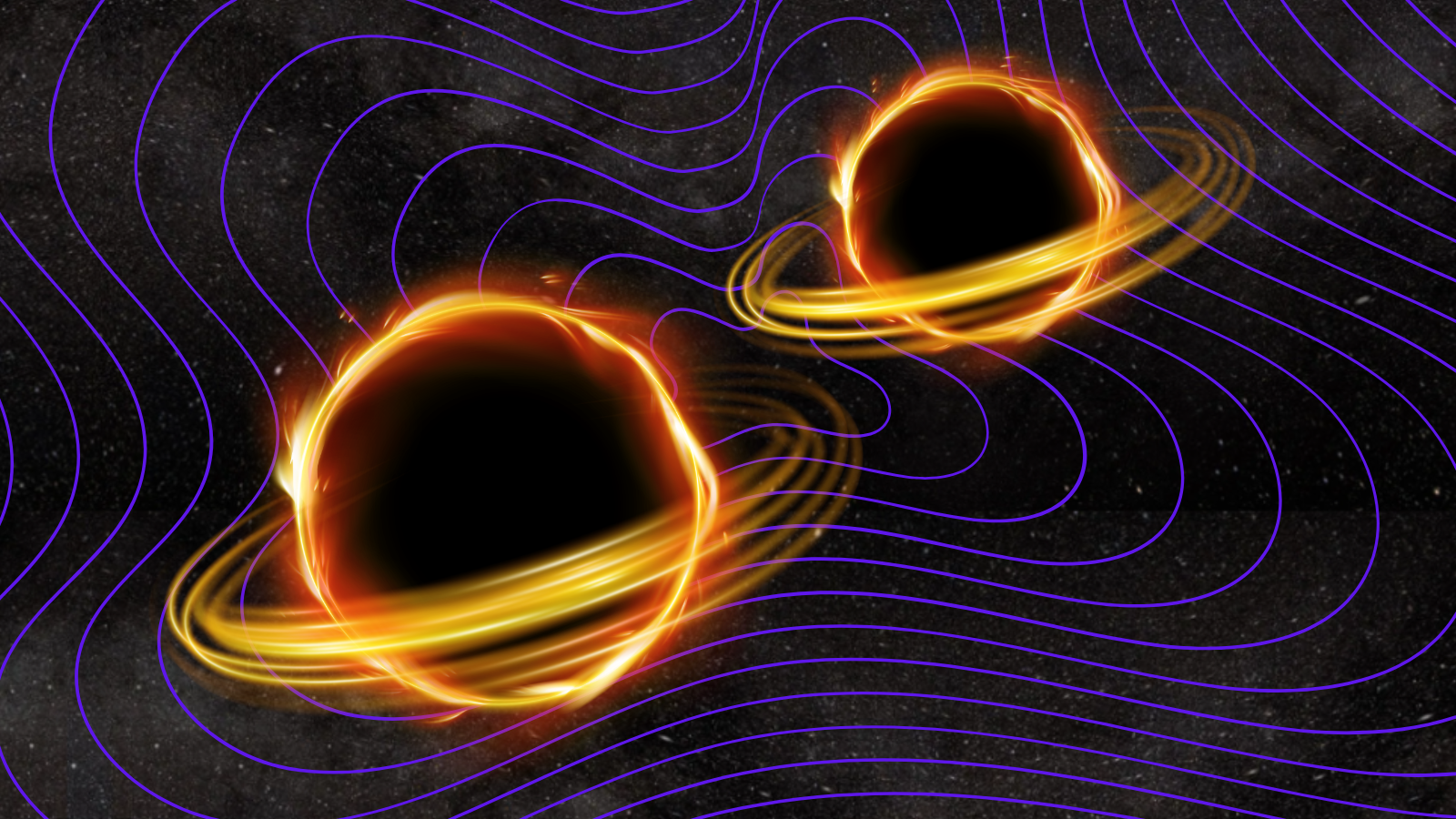
Scientists are unlocking a new era of cosmic discovery, using gravitational waves — ripples in space-time — like cosmic bells to uncover deep secrets about black holes and even hunt for elusive dark matter. The latest Gravitational Wave Transient Catalogue (GWTC-5.0), released in May 2026, has added 161 new signals, bringing the total detections to an astounding 390. This surge in data is giving physicists unprecedented 'listening' power to the universe. At the heart of these breakthroughs is the exceptionally loud signal named GW250114, detected in January 2025. This 'super-loud' event provided the clearest evidence yet to confirm Stephen Hawking's 1971 prediction, the Black Hole Area Law, which states that the total surface area of a black hole can only grow or stay the same, never shrink. Beyond confirming fundamental physics, researchers are also now using these wave patterns, known as Quasinormal Modes, to probe the mysterious Event Horizon of black holes and even search for signs of Dark Matter that might subtly twist these cosmic signals. Looking ahead, the future of gravitational-wave astronomy is buzzing with excitement. While existing detectors like the LIGO-Virgo-KAGRA (LVK) Collaboration continue to refine their observations, the next generation of observatories — including the ground-based Einstein Telescope, Cosmic Explorer, and the space-based LISA mission — promise even greater sensitivity. These advanced instruments are expected to provide clearer, more frequent signals, allowing scientists to test General Relativity with extreme precision and explore new forms of matter and energy, truly expanding our cosmic horizons.