Cosmic Detective Launched: Roman Telescope Begins Hunt for Universe's Hidden 95%
Context mode is active. Hover over any highlighted term to see its definition. Click a nested term to go deeper.
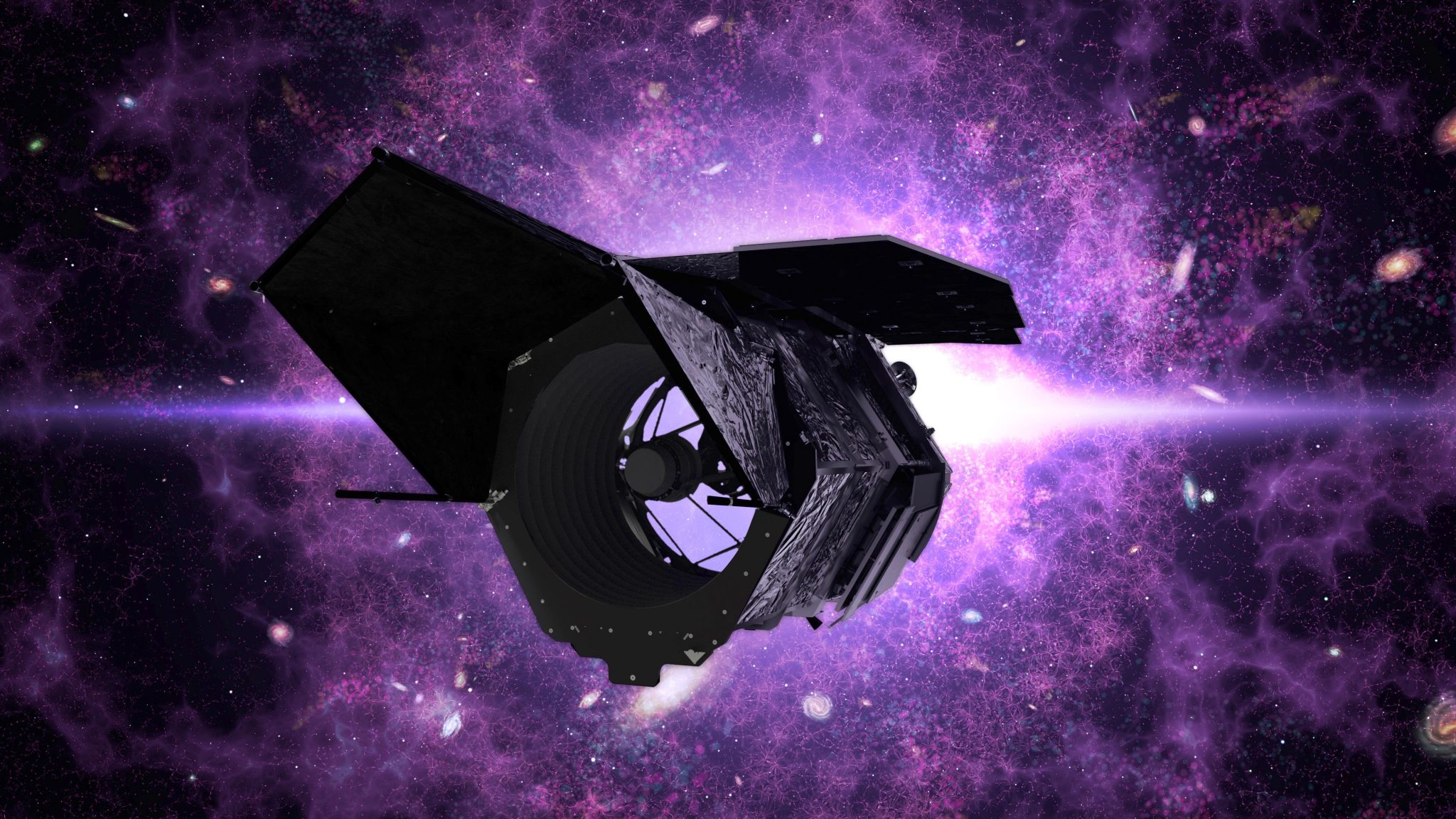
The Nancy Grace Roman Space Telescope, NASA latest flagship observatory, has successfully launched aboard a SpaceX Falcon Heavy rocket on August 30, 2026, and is now undergoing its commissioning phase en route to the Sun-Earth L2 orbit. This powerful new eye in space is set to unravel the universe's most profound mysteries: the elusive dark matter and dark energy, which together make up about 95% of our cosmos but remain largely unknown. Having already deployed its sunshade, solar panels, and successfully tested its guidance system and Coronagraph Instrument, Roman is on track to begin its groundbreaking scientific observations in early 2027. These invisible cosmic components are critical for understanding how our universe formed and continues to evolve, yet their true nature challenges the current Standard Model of Cosmology. Recent data from other missions and studies even hint that dark energy might not be constant, suggesting a more dynamic and complex universe than previously thought, which the Roman Telescope is uniquely positioned to investigate. By employing advanced techniques like gravitational lensing and a wide field of view 100 times larger than Hubble's, Roman will create vast 3D maps of galaxies and their distribution, directly probing the gravitational effects of dark matter and tracking the universe's accelerated expansion driven by dark energy. With its extended mission life of at least 22 years thanks to efficient propellant usage, Roman is expected to not only deepen our understanding of these cosmic forces but also revolutionize the search for exoplanets by directly imaging distant worlds. The data it collects will pave the way for future observatories, like the Habitable Worlds Observatory, aiming to find Earth-sized planets capable of supporting life. As Roman settles into its orbital home, the global scientific community is eagerly anticipating the revelations that could fundamentally alter our view of the universe.