Cranial Nerve Stimulation Breakthrough Offers New Hope for Swallowing Disorders
Context mode is active. Hover over any highlighted term to see its definition. Click a nested term to go deeper.
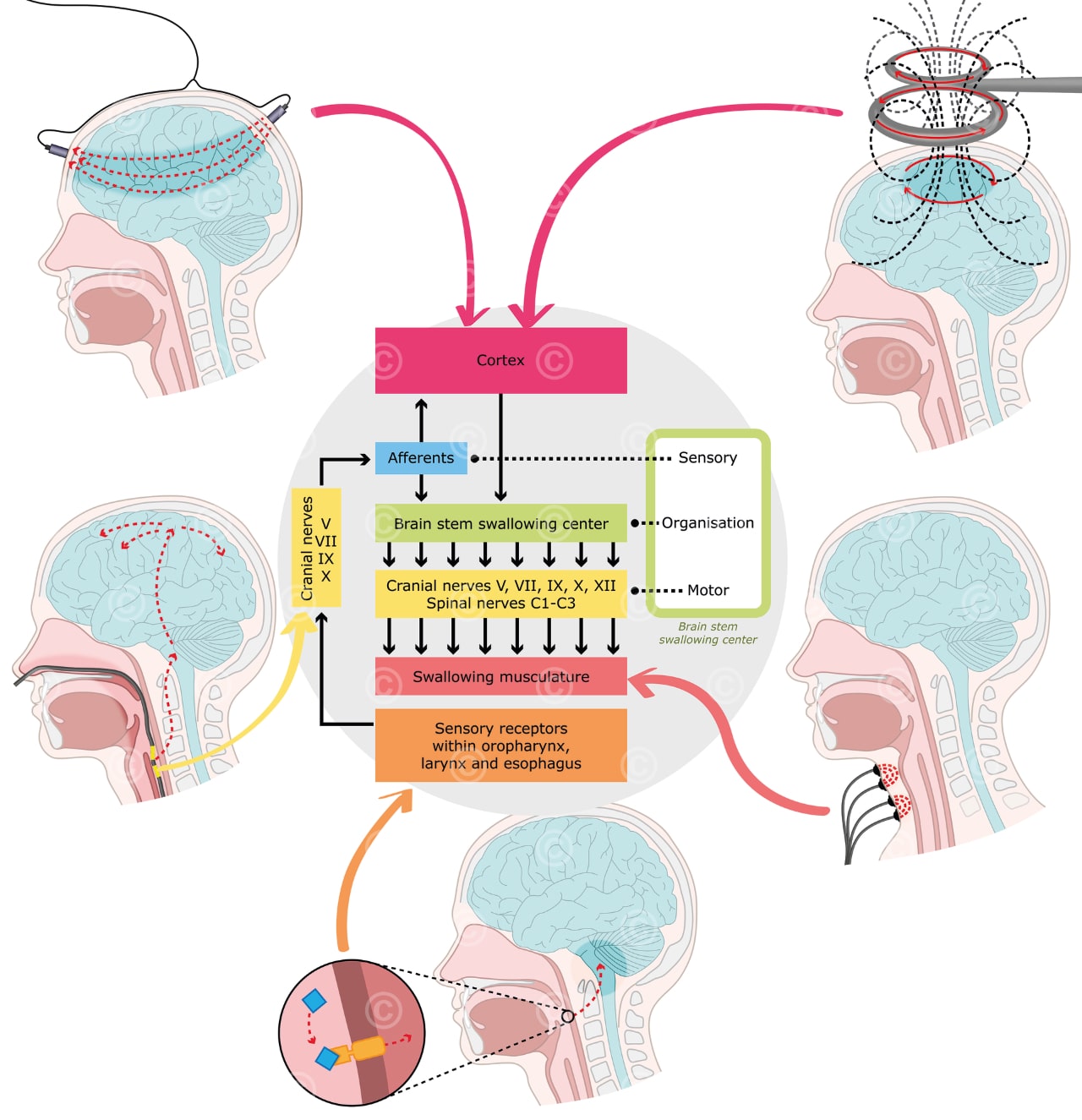
A groundbreaking critical review published on June 30, 2026, confirms that electrical stimulation of cranial nerves is a safe and effective treatment for dysphagia, a serious swallowing disorder affecting millions globally. This marks a significant leap forward, particularly with pharyngeal electrical stimulation (PES) and non-invasive transcutaneous vagus nerve stimulation (tVNS) showing promising results to restore swallowing function and improve patient outcomes. The findings, highlighted in multiple recent reports, signal a paradigm shift in how medical professionals approach this challenging condition. The review emphasizes that these cranial nerve stimulation methods, including implantable, minimally invasive PES, and non-invasive tVNS, are not only effective but also complementary, serving different clinical needs from hospital-based acute care to long-term home use. Notably, the Phagenyx System, a PES technology by Phagenesis Ltd., has already received FDA de novo clearance for short-term stroke-related dysphagia, and the American Stroke Association 2026 guidelines now recommend PES as a beneficial treatment. This is a major validation in a field where traditional swallowing exercises often fall short, leaving patients vulnerable to severe complications like aspiration pneumonia. Looking ahead, while PES is gaining wider adoption with healthcare systems like Atlantic Health introducing the Phagenyx System in May 2026, larger-scale clinical trials are still needed for transcutaneous VNS to secure full regulatory approval for dysphagia treatment. Beyond vagus nerve stimulation, early research is exploring hypoglossal nerve-based neuromodulation and electroacupuncture's role in influencing brainstem swallowing centers, hinting at a future where individualized cranial nerve stimulation protocols could dramatically improve the quality of life for dysphagia patients across various neurological conditions.