Pakistani journalist flubs with poser on India's Agni-6; how US war secretary Peter Hegseth reacted
Context mode is active. Hover over any highlighted term to see its definition. Click a nested term to go deeper.
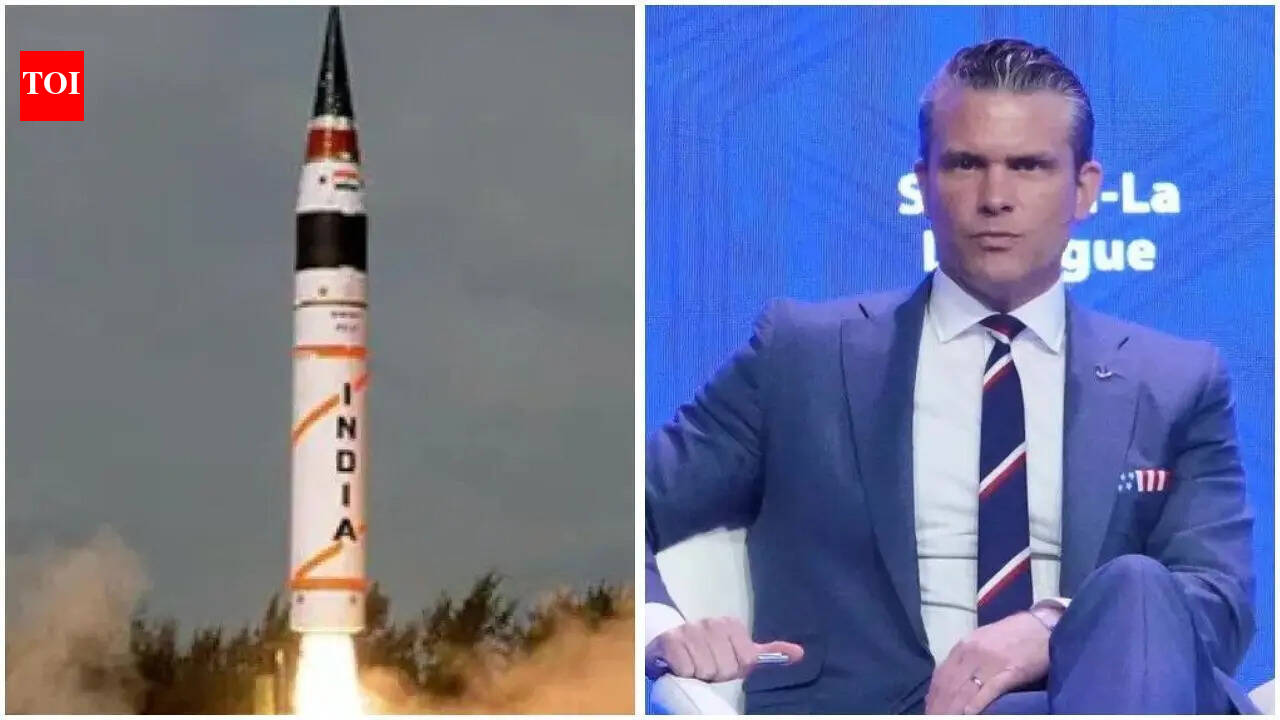
A Pakistani journalist's misinformed query about a non-existent Indian Agni-6 ICBM test created a diplomatic flutter at the high-stakes Shangri-La Dialogue, prompting U.S. Secretary of Defense Peter Hegseth to carefully navigate regional nuclear anxieties. The incident underscored the fragile strategic communication in the Indo-Pacific, even as India confirmed a recent test involved an advanced Agni missile equipped with Multiple Independently Targetable Re-entry Vehicle (MIRV) technology, not the speculative Agni-6. This misstep comes amid heightened strategic competition and an evolving arms landscape in South Asia. India's successful 'Mission Divyastra' in March 2024 (projecting to 2026 for relevance) with its Agni-5 missile showcased indigenous MIRV capabilities, a development keenly watched by regional powers and global non-proliferation advocates alike. Such advancements are crucial for India's credible minimum deterrence strategy but invariably fuel Pakistan's security concerns, contributing to a regional dynamic prone to misinterpretation and escalation. Hegseth's cautious response, advocating for "strategic stability" without directly apportioning blame, reflects Washington's delicate balancing act between its Indo-Pacific allies and its broader counter-proliferation objectives. The immediate aftermath of the dialogue will see continued scrutiny on India's missile modernization program and Pakistan's reactions, potentially accelerating its own indigenous missile development efforts. Global powers will be pressing for greater transparency and de-escalation mechanisms to prevent similar miscommunications from triggering genuine security crises. Future editions of forums like the Shangri-La Dialogue will likely feature more pointed discussions on regional arms races, demanding clearer communication from nuclear states to maintain a precarious strategic equilibrium in a volatile geopolitical theater.