Kashmir's Tourism Boom vs. Environment: A Battle for the Valley's Future
Context mode is active. Hover over any highlighted term to see its definition. Click a nested term to go deeper.
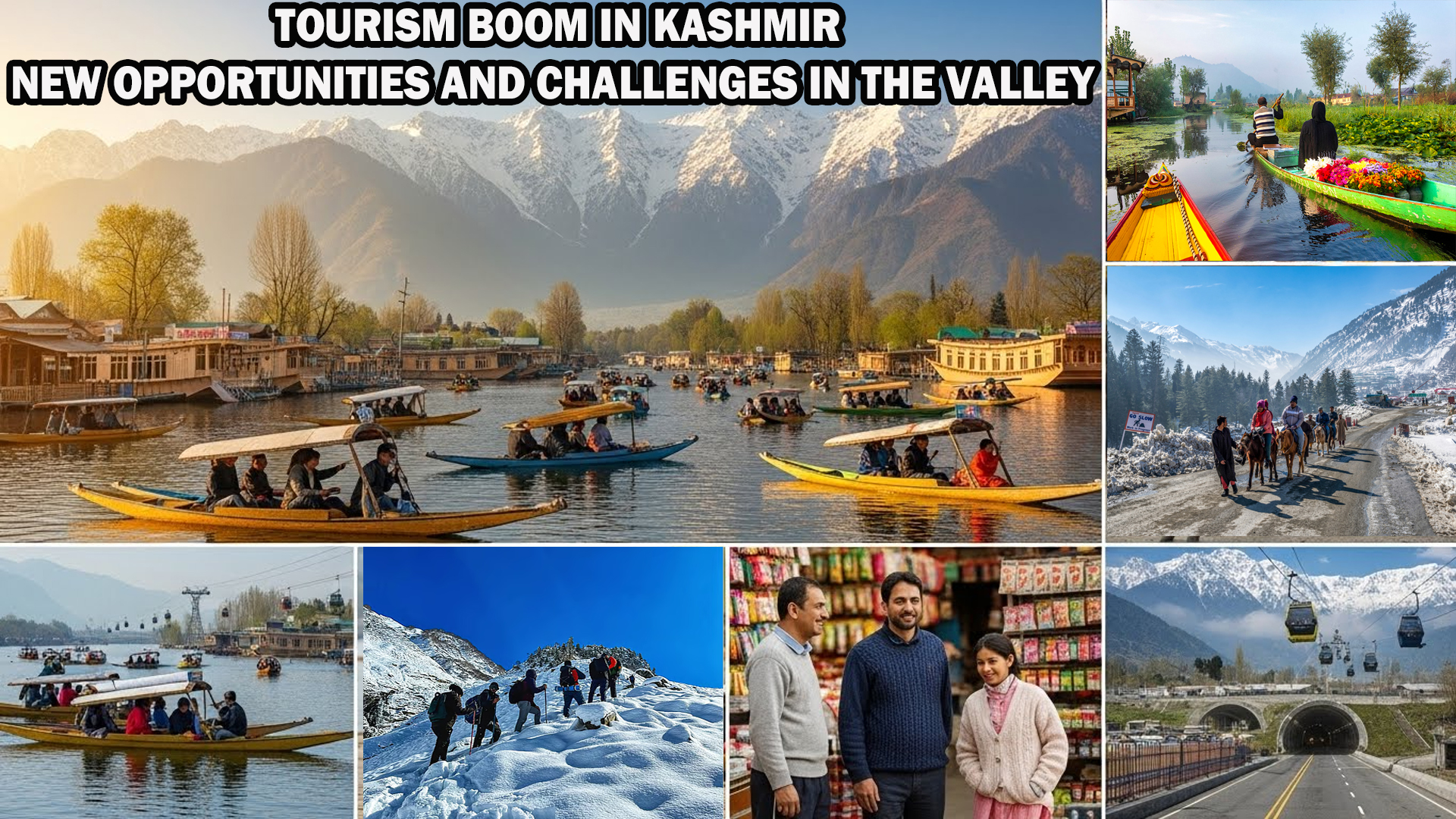
Tourism leaders in Kashmir recently visited Lok Bhavan, the administrative hub, raising a serious alarm about the environmental damage threatening the very beauty that draws millions of visitors. Despite a record-breaking 2.3 crore tourist visits to Jammu and Kashmir in 2024, the region is now grappling with rapidly melting glaciers, widespread plastic pollution, and a surge in illegal construction, pushing its fragile ecosystem to a breaking point. This direct appeal highlights a critical turning point for the region, forcing a re-evaluation of its 'popularity price'. The stakes are incredibly high, with the tourism sector supporting over 10 lakh livelihoods across the region. Recent studies show glaciers in the Kashmir Himalayas have shrunk by nearly 17% in three decades, with the vital Kolahoi Glacier receding significantly, threatening water sources for agriculture and drinking. While the J&K government is actively finalizing a new Eco-Tourism Policy to promote responsible travel and community involvement, a staggering 90% of over 5,000 hotels built since 2021 are reportedly illegal, putting immense pressure on forests and water systems in popular spots like Pahalgam and Gulmarg. This unchecked development, combined with the lingering impact of the 2025 Pahalgam attack on visitor numbers and recent cloudbursts, complicates efforts to balance economic growth with ecological preservation. Going forward, Chief Minister Omar Abdullah is pushing for a shift towards 'value-based tourism', focusing on quality experiences over sheer numbers, and the renewed Homestay Policy aims to formalize local accommodations. The success of these initiatives and the upcoming Eco-Tourism Policy, expected within six months, will depend heavily on stricter enforcement, government-business collaboration, and community participation. The challenge now is to transform political dialogue at Lok Bhavan into concrete actions on the ground, ensuring Kashmir natural charm isn't loved to death.