Drones, MMA fighter arrest, water main break. Here are top stories from the Keys
Context mode is active. Hover over any highlighted term to see its definition. Click a nested term to go deeper.
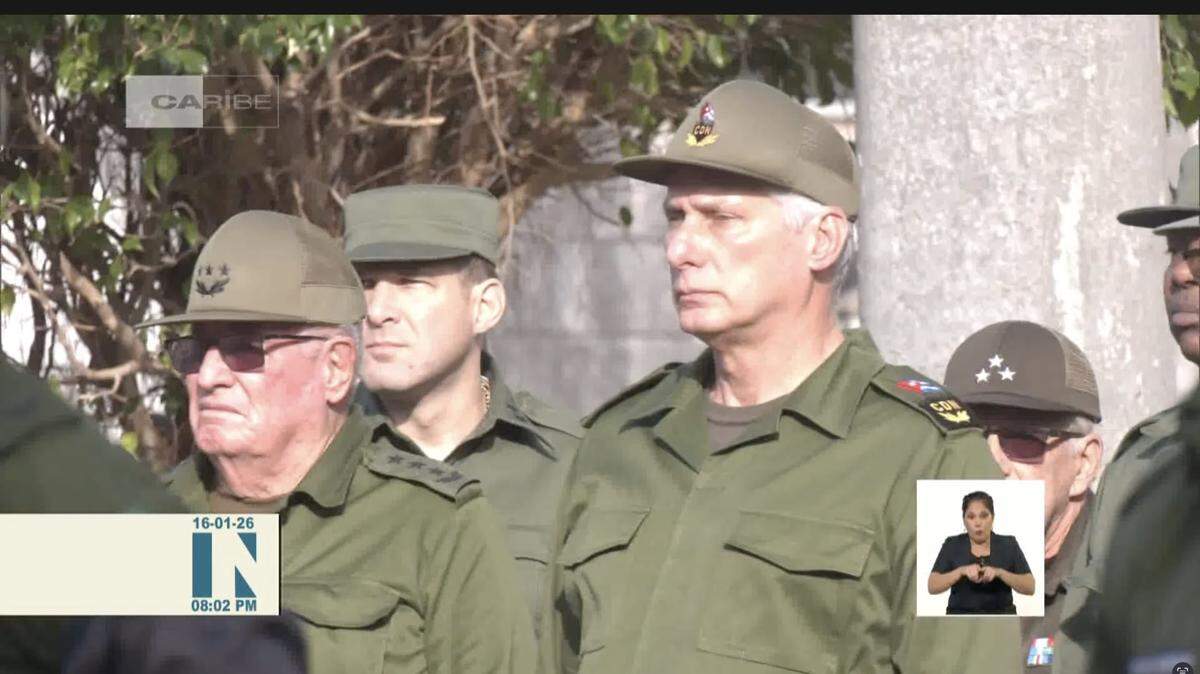
Cuban Defense Minister, Gen. Álvaro López Miera, and President Miguel Díaz-Canel recently attended the burial of 4 of 32 Cuban bodyguards, who Cuba alleges were killed during a U.S. military operation to capture Venezuelan President Nicolás Maduro. Raúl Guillermo Rodríguez Castro, Raúl Castro’s grandson and a prominent security official, was also present at the solemn event. This highly sensitive occasion underscores the lingering aftermath of "Operation Gideon," a failed mercenary incursion into Venezuela in May 2020, which Havana and Caracas consistently frame as a direct act of U.S. aggression resulting in significant casualties among Cuban security personnel deployed to protect the Venezuelan head of state. The presence of such high-ranking officials indicates the profound state importance attached to the incident. This event significantly highlights the enduring friction and deeply entrenched geopolitical proxy conflict characterizing US-Venezuela relations and US-Cuba relations. The Havana-Caracas axis, solidified by the tenets of the Bolivarian Revolution, views this incident as a critical affirmation of its defensive posture against perceived external destabilization efforts. The prominent attendance, especially by Raúl Castro's grandson, signals the unbroken continuity of Cuba’s foreign policy doctrine and the Castro family's influence in strategic security matters, reinforcing the narrative of a shared destiny and mutual defense between the two socialist allies against perceived U.S. hegemony. Such public acknowledgments of casualties serve to galvanize domestic support while simultaneously sending a strong diplomatic signal regarding regional power dynamics and the human cost of these ongoing ideological rivalries.