What’s on-screen marking, and where did CBSE go wrong?
Context mode is active. Hover over any highlighted term to see its definition. Click a nested term to go deeper.
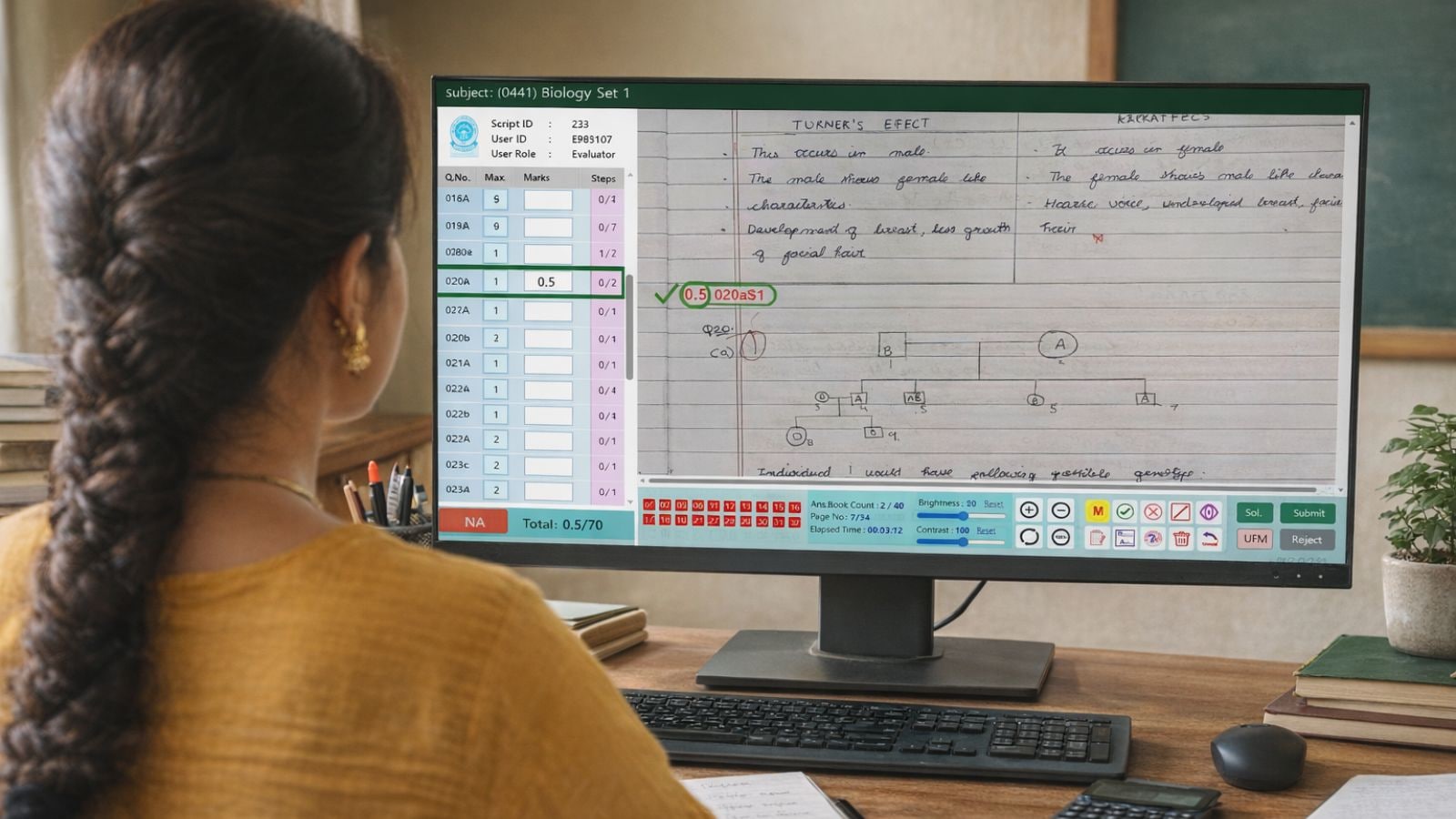
India Central Board of Secondary Education (CBSE) is embroiled in a national crisis following the turbulent rollout of its On-Screen Marking (OSM) system for the 2026 Class 12 board examinations. Declared on May 13, 2026, the results sparked widespread student outrage over unexpectedly low marks, blurred digital scans of answer scripts, missing pages, and a severely malfunctioning re-evaluation portal, leading to a significant drop in the national pass percentage and forcing the Ministry of Education to reportedly sack the board's chairman and secretary. The digital marking system, intended to streamline evaluations under the ambitious National Education Policy (NEP) 2020, instead exposed critical flaws in scale and preparedness. Teachers, given barely a week's training, struggled with technical glitches and screen fatigue, while students faced exorbitant re-evaluation fees and concerns over vendor selection, with Coempt Eduteck drawing scrutiny for alleged past controversies. Adding fuel to the fire, reports surfaced in February 2026 about unaddressed security vulnerabilities, including publicly accessible answer sheets and question papers on Amazon Web Services (AWS) servers, despite prior alerts to the Indian Computer Emergency Response Team (CERT-In). In response to the escalating backlash, CBSE has initiated corrective measures, including reducing re-evaluation fees, re-scanning thousands of answer scripts, and migrating all scanned data to its own secure servers while implementing stringent Service Level Agreements (SLAs) with IT vendors. However, with over 4 lakh students seeking scanned copies and some even petitioning the Supreme Court of India, the long-term repercussions for trust in digital education and the future of India examination system remain uncertain, compelling a hard look at the balance between technological ambition and ground-level execution.