Diesel curbs raise concerns for hospitals, IT parks dependent on generator power
Context mode is active. Hover over any highlighted term to see its definition. Click a nested term to go deeper.
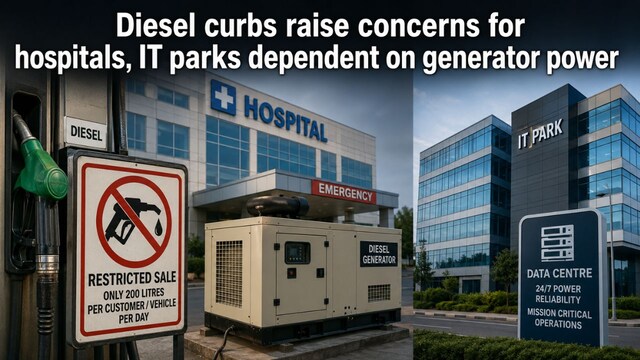
India's government delivered a sudden jolt to critical sectors on June 11, restricting industrial, commercial, and institutional consumers from purchasing diesel at retail petrol pumps, capping sales at 200 liters per customer per day. This directive, designed to prevent localized fuel shortages stemming from a significant pricing anomaly between retail and bulk diesel, has immediately triggered widespread concern among hospitals, IT parks, data centers, and telecom facilities that heavily depend on diesel generators for both backup and regular power during peak demand. The unexpected move threatens to disrupt continuous operations for essential services and major economic drivers, potentially compromising patient safety and business continuity across the nation. The new curbs expose a deeper vulnerability within India's power infrastructure, where inconsistent grid reliability and high peak-hour electricity tariffs often make diesel generators a primary, rather than just emergency, power source for critical facilities. For large hospitals, uninterrupted power is non-negotiable, essential for surgeries and intensive care, while data centers and IT parks operate under stringent uptime commitments crucial for India's booming digital economy, which sees massive investments in AI and hyperscale data centers. This current restriction compounds existing pressures, including the Central Pollution Control Board stringent CPCB IV+ emission standards for diesel generators and the recurrent Graded Response Action Plan (GRAP) bans on diesel gensets during poor air quality periods, forcing a costly and complex energy transition on industries already grappling with energy security and operational costs. Industry associations are urgently appealing for exemptions and operational clarifications, highlighting the severe repercussions for public health and economic stability if assured diesel supplies are not maintained for essential services. Organizations with established bulk fuel contracts might face limited immediate disruption, but those relying on flexible retail purchases must rapidly overhaul their procurement strategies. This development accelerates the imperative for critical infrastructure to invest in more robust, diversified, and sustainable power solutions, including advanced power electronics, dual fuel systems, and increased reliance on renewable energy, even as the national power grid struggles to keep pace with escalating demand from digital transformation. The coming weeks will reveal the government's flexibility in applying these curbs to essential services and the industry's agility in adapting to this sudden, high-stakes shift in fuel procurement.