DMK Alleges Widespread EVM Glitches, Threatens Legal Battle Over Tamil Nadu Election
Context mode is active. Hover over any highlighted term to see its definition. Click a nested term to go deeper.
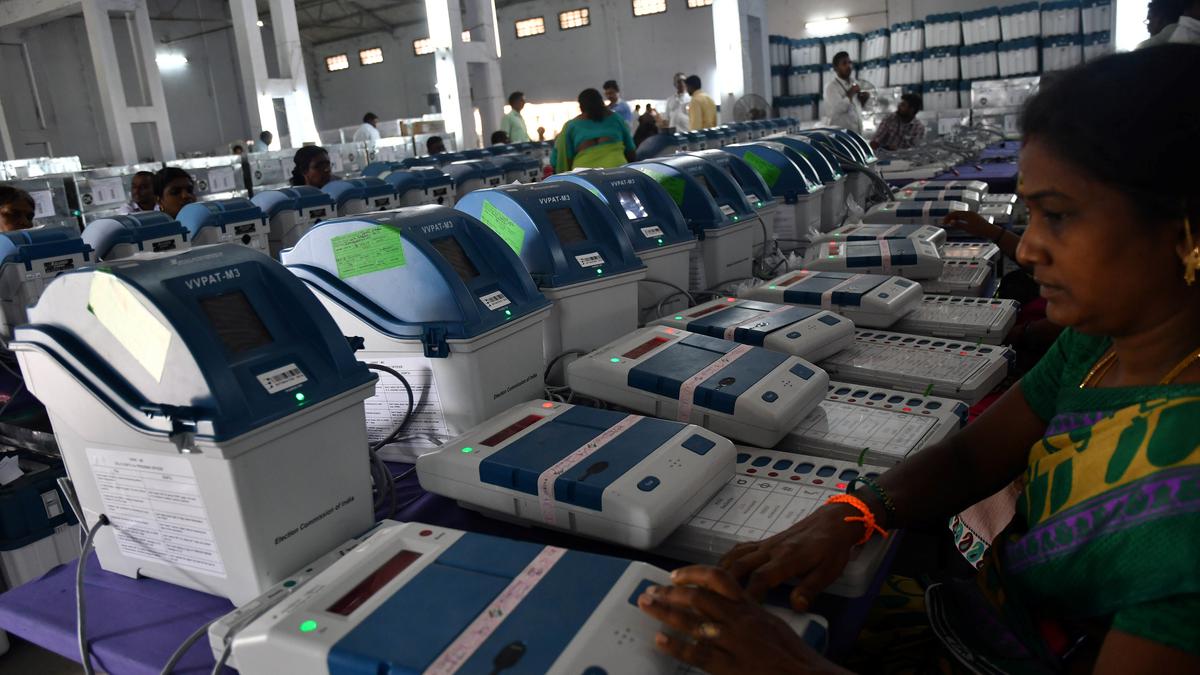
The Dravida Munnetra Kazhagam (DMK) has escalated its challenge against the integrity of Electronic Voting Machines (EVM) used in the recent Tamil Nadu Assembly elections, boycotting the ongoing verification process in Kolathur and announcing plans for legal action. N.R. Elango, DMK Law Secretary and Rajya Sabha MP, revealed that nearly 30% of the EVM examined in Kolathur, where party chief M.K. Stalin controversially lost, showed discrepancies, alongside a non-functional machine discovered in Kanchipuram. This move casts a shadow over the election results and reignites a long-standing debate on electoral transparency in India. These fresh allegations come after M.K. Stalin, the former Chief Minister, petitioned the Election Commission of India following his defeat in the Kolathur Assembly constituency to the Tamilaga Vettri Kazhagam (TVK) candidate, V.S. Babu. The Election Commission initiated a seven-day verification process starting July 29, 2026, at the Chintadripet centre, involving technical checks of EVM and VVPAT units. However, District Election Officer G.S. Sameeran maintains that no malpractice has been found, with polled votes matching Form 20 records and preliminary mock poll completing successfully, despite a reported VVPAT technical glitch that DMK representatives declined to address by replacing the unit. The DMK decision to approach either the Madras High Court or the Supreme Court signifies a crucial turning point, potentially triggering a significant legal battle over election integrity. This development follows previous instances where Elango, in December 2025, raised concerns about EVM functionality and the Election Commission's role in the Rajya Sabha, demanding absolute certainty against manipulation. As the Election Commission emphasizes its '100% transparent exercise' to establish reliability, the forthcoming judicial scrutiny will be pivotal in addressing the persistent questions surrounding EVM accuracy and the broader push for robust electoral reforms in India.