Ebola Outbreak in DRC Surges Past 1,200 Deaths Amidst Conflict and Vaccine Race
Context mode is active. Hover over any highlighted term to see its definition. Click a nested term to go deeper.
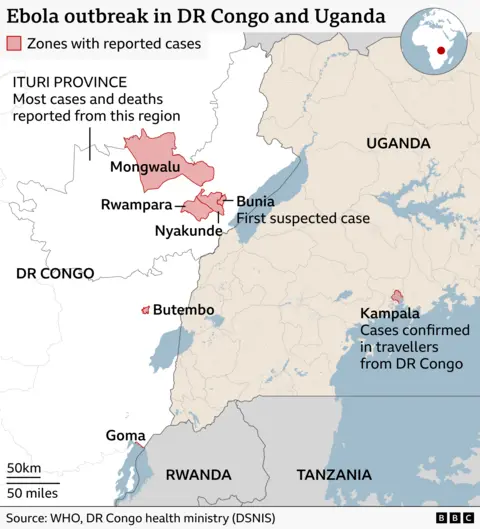
The Democratic Republic of Congo (DRC) is grappling with its fastest-growing Ebola outbreak on record, with confirmed deaths surging past 1,200 as of July 22, 2026. This rapidly escalating crisis, fueled by the aggressive Bundibugyo virus, was declared a Public Health Emergency of International Concern (PHEIC) by the World Health Organization (WHO) in May, highlighting the global alarm over its uncontrolled spread. This 17th Ebola outbreak in the DRC is particularly challenging because, unlike previous epidemics caused by the Zaire ebolavirus, there are currently no approved vaccines or specific treatments for the Bundibugyo strain. Response efforts, led by organizations like Médecins Sans Frontières (MSF), UNICEF, and Save the Children, are severely hampered by active armed conflict, widespread insecurity, and population displacement in eastern DRC. This volatile environment disrupts crucial public health measures like contact tracing and infection prevention and control, while a parallel mental health crisis deepens, especially among children traumatized by loss and fear. As the death toll climbs and the outbreak continues to outpace the response, a glimmer of hope emerges from ongoing vaccine trials for Bundibugyo virus, with a Phase 1 human trial recently launched. The international community, including Africa CDC and WHO, is intensifying support to strengthen surveillance and community engagement. However, without sustained funding and a more stable security situation, containing this virulent strain and addressing the profound humanitarian needs remains an uphill battle, demanding urgent and coordinated action.