EPFO Simplifies PF Advance Rules, Empowering Millions for Urgent Life Needs
Context mode is active. Hover over any highlighted term to see its definition. Click a nested term to go deeper.
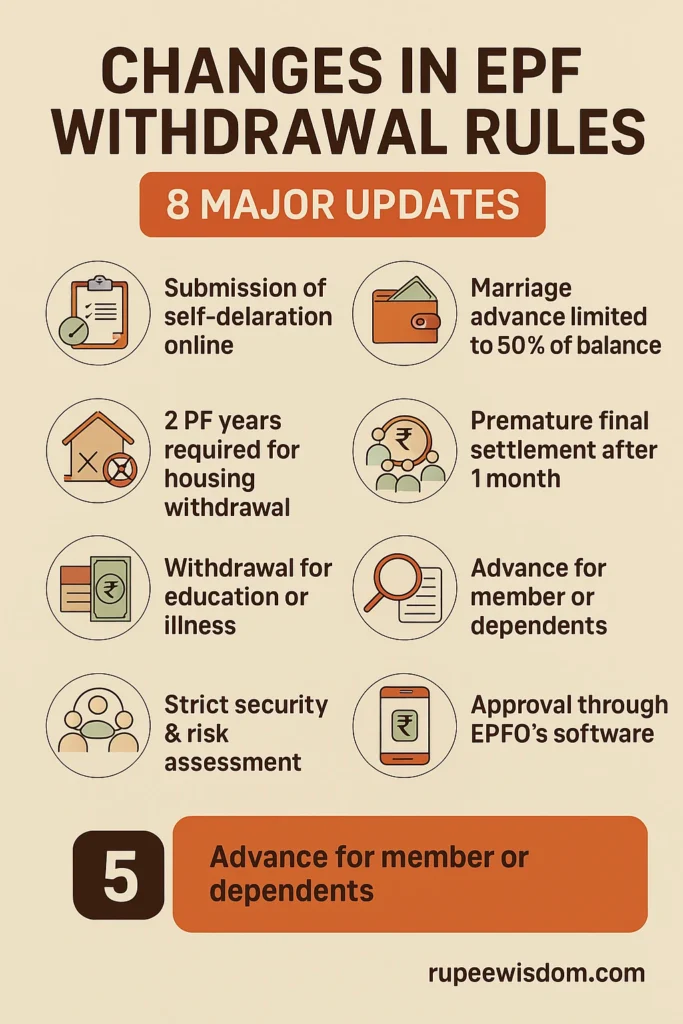
In a significant move offering a major relief to millions of Indian salaried professionals, the Employees' Provident Fund Organisation (EPFO) has rolled out new, simplified rules for EPF advance withdrawals in 2026. Announced recently on its social media platform X, these updated guidelines streamline access to provident fund savings for crucial life events like medical emergencies, higher education, and housing needs. The changes consolidate numerous older provisions into three clear categories, making it much easier for members to understand their eligibility and withdrawal limits. The revised framework now groups reasons for advance withdrawals into 'Essential Needs,' 'Housing Needs,' and 'Special Circumstances,' replacing the previous complex 13 categories. Under 'Essential Needs,' members can make unlimited withdrawals for medical treatments, while education-related advances are permitted up to 10 times, and marriage-related withdrawals up to five times during their EPF membership. Housing-related advances, covering everything from purchasing a home to repaying a home loan, allow up to five withdrawals. Generally, a minimum of 12 months of EPF membership is required for these partial withdrawal, with members typically able to access up to 75% of their total EPF balance, ensuring a 25% minimum balance retention. This simplification, initially approved by the EPFO Central Board of Trustees in October 2025, aims to accelerate claim settlements and improve digital accessibility for its over seven crore subscribers. With enhanced Aadhaar verification and online KYC integration through the Unified Member Portal, the EPFO is pushing for faster, paperless processing of advance claims, often within three working days. This strategic overhaul signals EPFO commitment to empowering its members, allowing them timely access to their retirement savings for pressing financial requirements without compromising their long-term security.