Euclid Telescope Spots Giant Black Holes, Challenging Universe's Early History
Context mode is active. Hover over any highlighted term to see its definition. Click a nested term to go deeper.
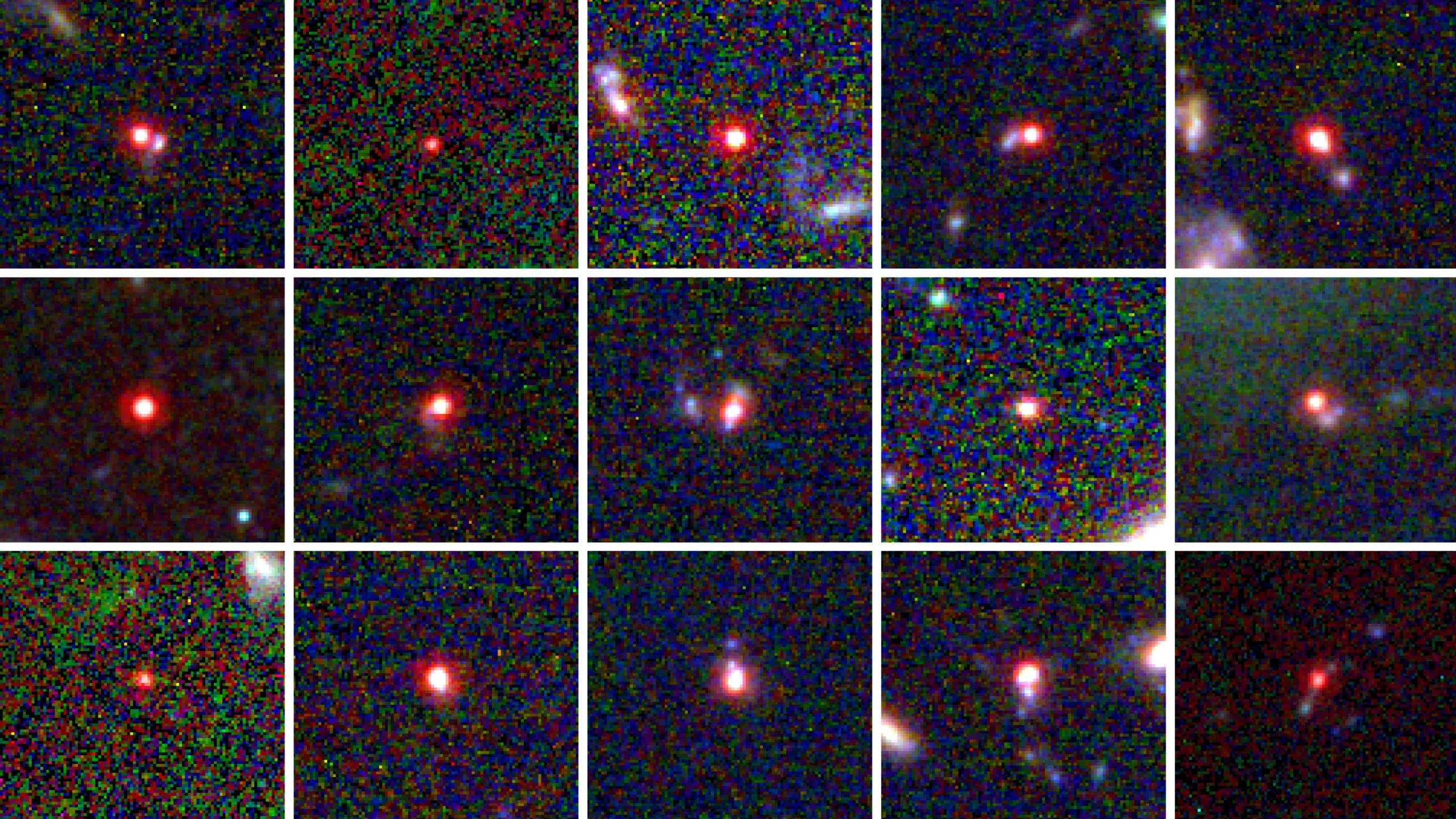
The European Space Agency (ESA) Euclid Space Telescope has made an astonishing discovery, identifying 31 of the universe's most ancient quasars, including two record-breakers that shone just 670 million years after the Big Bang. These dazzling objects, powered by supermassive black holes billions of times the Sun's mass, are so surprisingly massive for their age that they're forcing astrophysicists to rethink how these cosmic giants formed so rapidly in the early universe. This finding more than doubles our known catalog of such early quasars, offering an unprecedented look into the cosmos' infancy. This groundbreaking observation deepens a persistent puzzle known as the 'early black hole growth problem.' Current cosmological models struggle to explain how black holes could accumulate such immense mass within the relatively short timeframe available after the Big Bang, which usually requires billions of years of gradual accretion. Euclid's ability to detect fainter quasars across vast sky areas, unlike previous telescopes that could only spot the brightest outliers, is a game-changer, providing a broader 'census' of these ancient objects to study their population as a whole. Astronomers are now tasked with updating our understanding of the universe's evolution and black hole formation. The data from these newly discovered quasars, observed during the pivotal 'epoch of reionization,' will be crucial for refining existing cosmological models and potentially exploring new theories, such as primordial black holes or cosmic bounce scenarios. Future missions, like NASA forthcoming Nancy Grace Roman Space Telescope, will build upon Euclid's insights to further unravel these profound mysteries of our universe.