Europe Roasts Under Record Heat, Fueling Wildfires and Threatening Food Supply
Context mode is active. Hover over any highlighted term to see its definition. Click a nested term to go deeper.
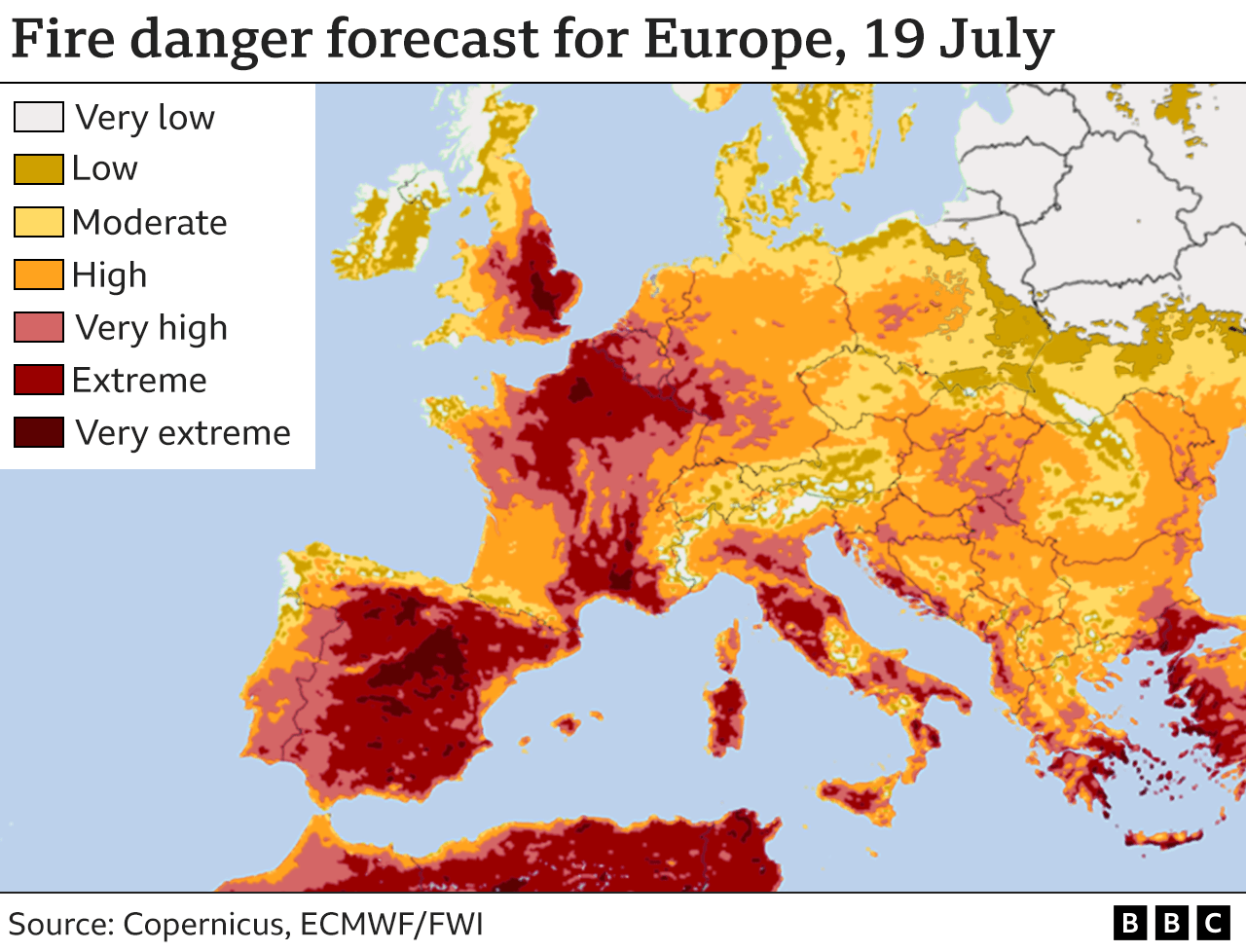
Europe is currently struggling under an intense and prolonged series of heatwaves, with Western Europe experiencing its hottest June-July period ever recorded in 2026. Temperatures have consistently soared above 40 degrees Celsius in many countries, leading to widespread chaos from devastating wildfires to dangerously low river levels across the continent. Scientists are clear: these extreme events are directly linked to human-caused climate change, making Europe the fastest-warming continent on Earth. The immediate impact is severe, particularly for farming, with an estimated €2 billion loss and 9 million tonnes reduction in grain production for the EU and UK alone. Countries like France face their smallest maize harvest in half a century. Beyond agriculture, massive wildfires have consumed vast areas in Spain, France, and other nations, already surpassing last year's record-breaking burnt land. Major rivers such as the Rhine and Danube are at historic lows, disrupting shipping and threatening essential supplies, while thousands of lives have been lost due to heat-related illnesses. Looking ahead, European leaders are under immense pressure to strengthen climate action. The European Commission is working on a new framework for climate resilience and adaptation, expected in late 2026, to help countries prepare better for future extreme weather. While the long-term goals of the European Green Deal remain, the urgent need for both reducing greenhouse gas emissions and adapting to a warmer world has become painfully clear this scorching summer. Citizens and industries must prepare for more frequent and intense heat in the years to come, pushing for quicker, more effective solutions.