Europe's Rivers Turn to Trickles: Drought Ravages Fish Farms, Crippling Trade and Energy
Context mode is active. Hover over any highlighted term to see its definition. Click a nested term to go deeper.
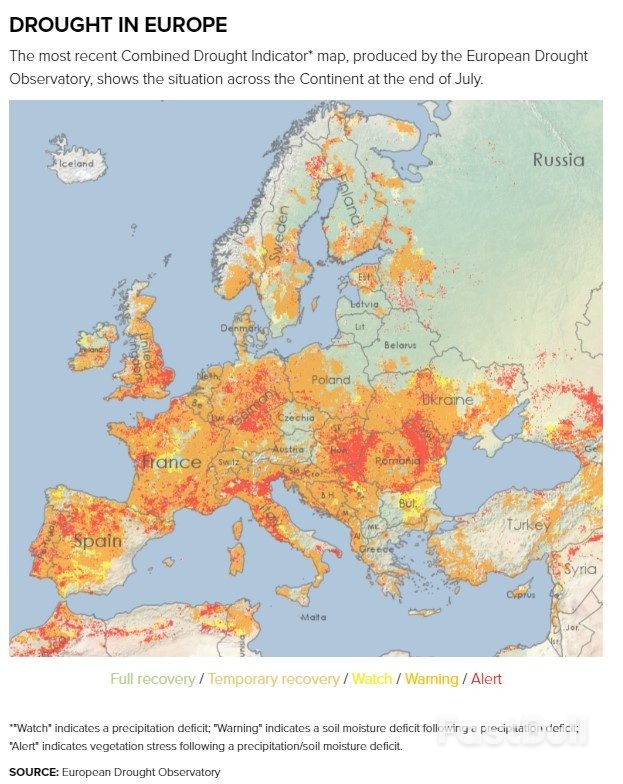
Europe is in the grip of an extreme drought and record heatwaves this summer, causing major rivers to shrink to alarmingly low levels and wreaking havoc on the continent's fish farms. Countries like Hungary have seen nearly 280 metric tons of fish die across 20 farms due to drying ponds, resulting in millions of euros in losses and forcing emergency measures across Central and Eastern Europe. The crisis extends far beyond fish, paralyzing vital waterways like the Danube, Rhine, Po, and Elbe, which are now too shallow for normal cargo transport, driving up freight costs and threatening industrial supply chains. This severe water scarcity is also straining energy production, as power plants struggle for cooling water and hydropower output drops. The reappearance of centuries-old 'Hunger Stones' in rivers like the Elbe, carved to warn of famine during past drought, serves as a stark historical reminder of the current widespread agricultural and economic disruption, amplified by human-induced climate change. With half of Europe under drought conditions and little immediate relief expected, governments and businesses are scrambling to implement emergency measures like reducing fish feeding and draining ponds to save stock. The European Commission is pushing its 2025 European Water Resilience Strategy, calling for global action on drought management and water reuse, but experts warn that without aggressive cuts to emissions, such scorching, dry summers will become the norm, demanding a complete rethinking of water management and infrastructure to build long-term resilience.