Exoplanet WD 1856 b Reveals Survival Secrets After Host Star's Fiery Death
Context mode is active. Hover over any highlighted term to see its definition. Click a nested term to go deeper.
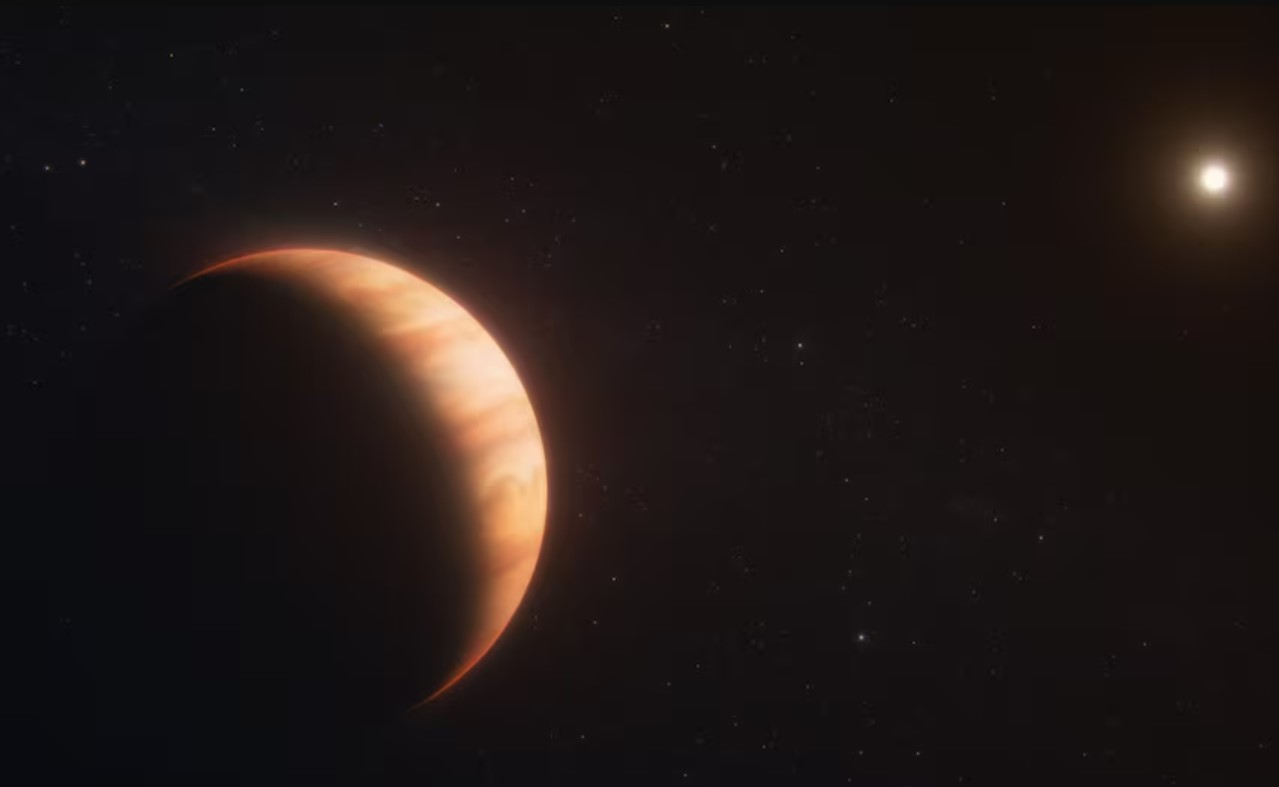
Astronomers have just peered deeply into the atmosphere of WD 1856 b, a Jupiter-sized exoplanet orbiting a 'dead' star, revealing its surprisingly hot conditions and methane-rich air. This groundbreaking observation, made with the James Webb Space Telescope, gives us a rare glimpse into how planets can survive the violent demise of their sun and offers clues about our own Solar System distant future. The gas giant, roughly eight times the mass of Jupiter, orbits the white dwarf WD 1856+534, a stellar remnant located 81 light-years away in the constellation Draco. Its unexpected warmth, around 127 degrees Celsius, suggests the planet likely migrated into its current tight orbit long after its host star became a white dwarf, rather than surviving the initial, destructive Red Giant phase directly at such close proximity. Scientists believe complex gravitational influences from other stars in this unique triple star system might have pulled WD 1856 b inwards over billions of years. This new understanding is crucial as our own Sun is expected to swell into a Red Giant and eventually become a White Dwarf in about five billion years, potentially engulfing inner planets like Earth. While the ultimate fate of Earth remains a topic of debate, this research on WD 1856 b provides invaluable data, helping scientists refine models of planetary survival and migration, giving us a clearer picture of what lies ahead for worlds beyond our Solar System and perhaps even our own.