Federal vs. States: The Looming Showdown Over US AI Regulation Heats Up
Context mode is active. Hover over any highlighted term to see its definition. Click a nested term to go deeper.
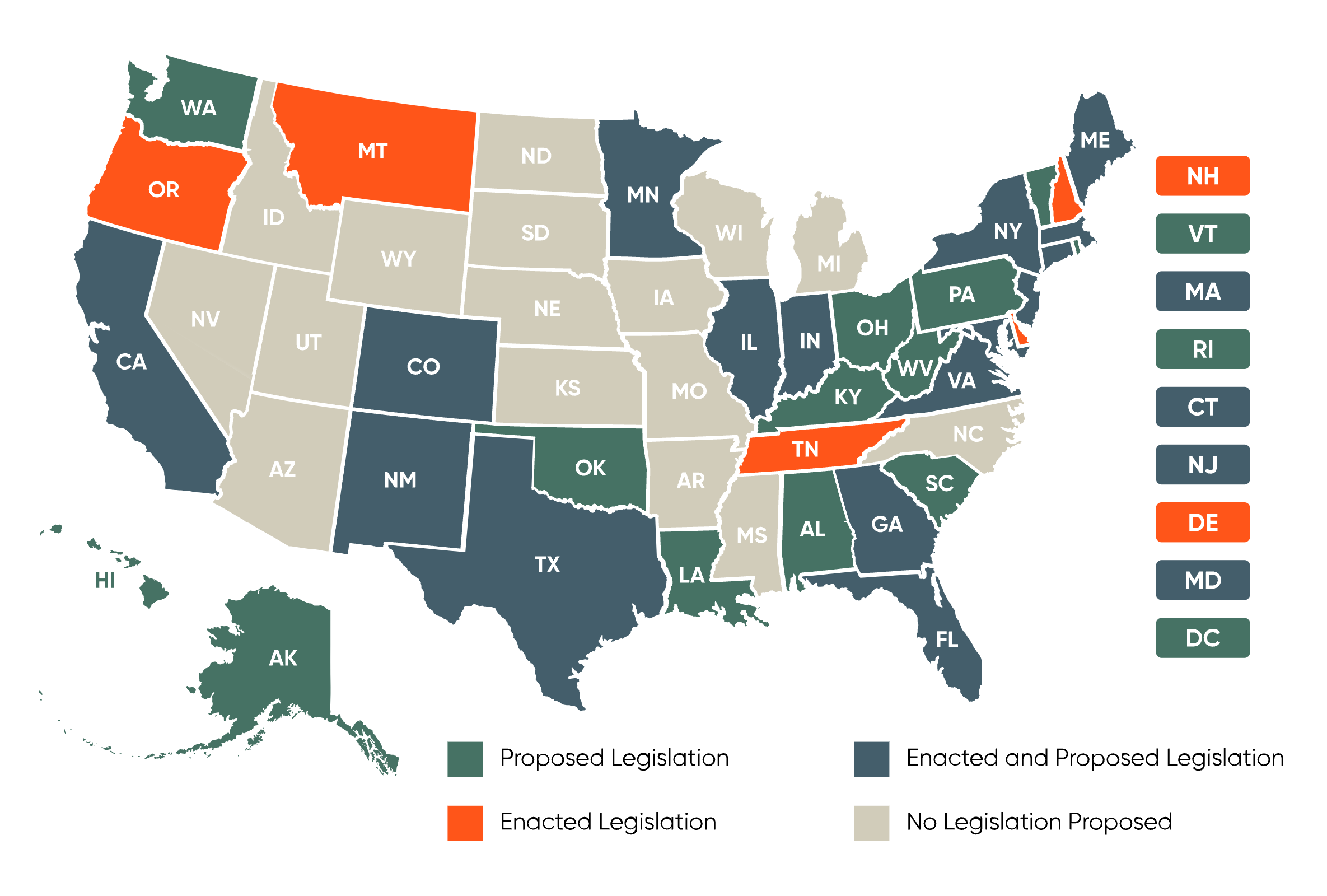
A major clash is brewing in the United States as federal efforts to establish a unified AI regulatory framework increasingly run up against a patchwork of state-level laws already in effect or soon to be implemented. Washington is pushing for broad 'Federal Preemption' of these diverse 'State AI Laws', arguing for a national standard to foster innovation and prevent a confusing regulatory landscape. However, state lawmakers are pushing back hard, worried that federal overreach could strip away crucial local protections and lead to a 'huge legal mess'. The Trump administration, through a December 2025 Executive Order, established an 'AI Litigation Task Force' aimed at challenging state regulations deemed 'onerous' or inconsistent with federal policy. This move intensified after the White House released its 'National Policy Framework for Artificial Intelligence' in March 2026, advocating for a lighter-touch, innovation-first approach. Meanwhile, congressional proposals like the 'Great American Artificial Intelligence Act (GAAIA)' discussion draft, circulated in June 2026, explicitly seek to preempt state laws governing the development of 'Frontier AI Models' for three years. This directly challenges states like California, New York, and Texas, which have enacted comprehensive regulations like California's 'Transparency in Frontier Artificial Intelligence Act (SB 53)', New York's 'Responsible AI Safety and Education Act (RAISE Act)', and Texas' 'Responsible Artificial Intelligence Governance Act (TRAIGA)', all effective in early 2026 or 2027. The coming months will likely see intensified legal battles, with the 'AI Litigation Task Force' expected to mount challenges under the U.S. Constitution's 'Supremacy Clause'. Businesses operating across state lines face increasing uncertainty, needing to navigate both existing state mandates and the evolving federal push for preemption. The outcomes of these disputes will fundamentally reshape the future of AI governance in the United States, determining whether innovation is guided by a unified national strategy or a diverse set of local rules.