Ghana's Coastline Disappearing Fast: Urgent Action Needed Against Erosion and Pollution
Context mode is active. Hover over any highlighted term to see its definition. Click a nested term to go deeper.
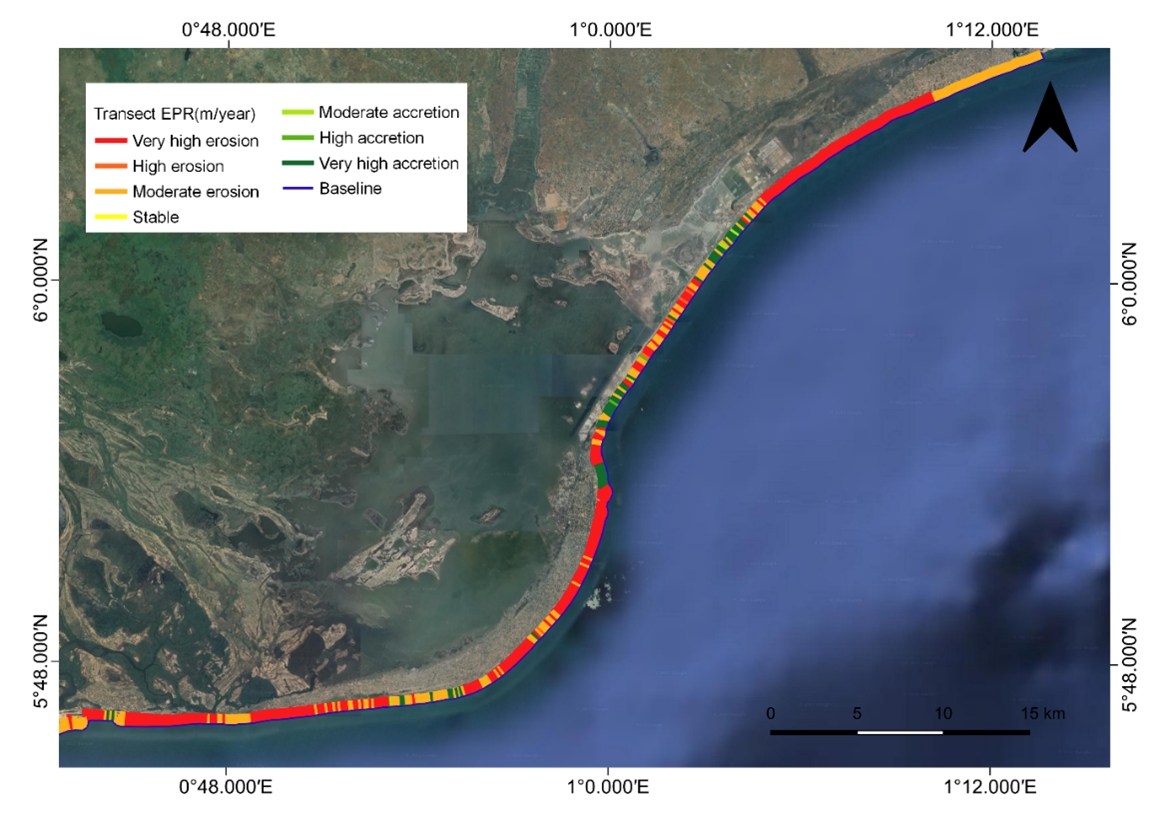
Ghana's vital coastline is eroding at an alarming average rate of two meters annually, with some areas losing up to seventeen meters in a single year, forcing thousands of people from their homes and devastating livelihoods. This rapid land loss, driven by rising sea levels and human activities like sand mining and dam construction, is posing an existential threat to Ghana's coastal communities and its significant 'Blue Economy' assets. The situation is further worsened by widespread 'Galamsey', or illegal mining, which poisons vital rivers with mercury and cyanide, sending polluted sediment to the ocean and threatening newly established marine protected area. At stake is Ghana's rich coastal ecosystem, a bedrock for fishing, tourism, and national economic growth. The government is pushing back with a multi-pronged approach, having completed over 15 kilometers of coastal protection projects using sea-walls, groynes, and breakwaters in areas like Komenda and New Takoradi. Critically, Ghana declared its first Marine Protected Area, the Greater Cape Three Points Marine Protected Area, in April 2026 to safeguard biodiversity, but this ecological haven is now directly threatened by upstream 'Galamsey' operations. Looking ahead, Ghana is operationalizing its national Blue Economy Strategy, aiming for a coordinated plan with international support from partners like the World Bank WACA Coastal Protection Project and Japan International Cooperation Agency (JICA). A new Blue Economy Commission Bill is currently being drafted with assistance from the United Nations Development Programme (UNDP) and the African Union Commission (AUC), with submission to Parliament expected by October 2026. These efforts aim to build long-term resilience, but the urgent need to halt illegal mining and enforce environmental regulations remains paramount for the future of Ghana's coastal communities and its blue economy.